



Become an entrepreneur

Our all-in-one bio-inputs

Costs less.Works faster.Yields more.

  • Costs less than chemical inputs
  • Faster than chemical inputs
  • Higher, healthier yields than chemical inputs

Right from Season 1 · across 80+ crops

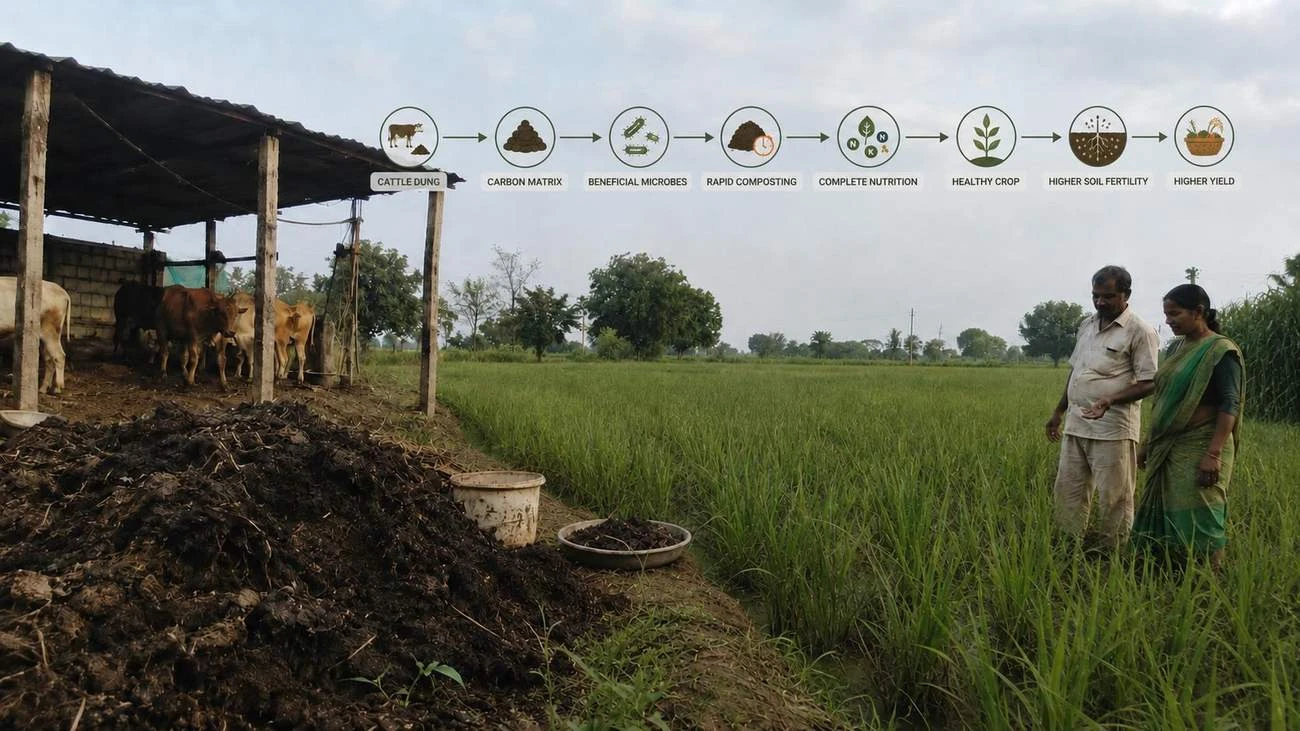
Supercharging cattle dung

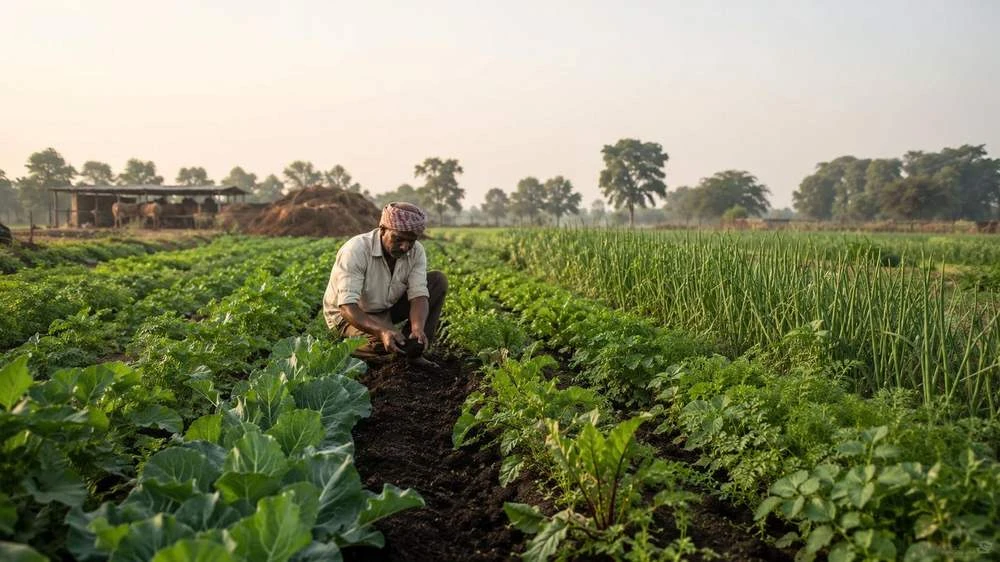
The farmer’s own dung and compost, turned into an all-in-one regenerative crop input.

41.11% TOC · 12.23% NPK · 1.86×10⁹ CFU/g
One system · four all-in-one products

Build the foundation, nourish the crop, protect performance, and supercharge your manure.

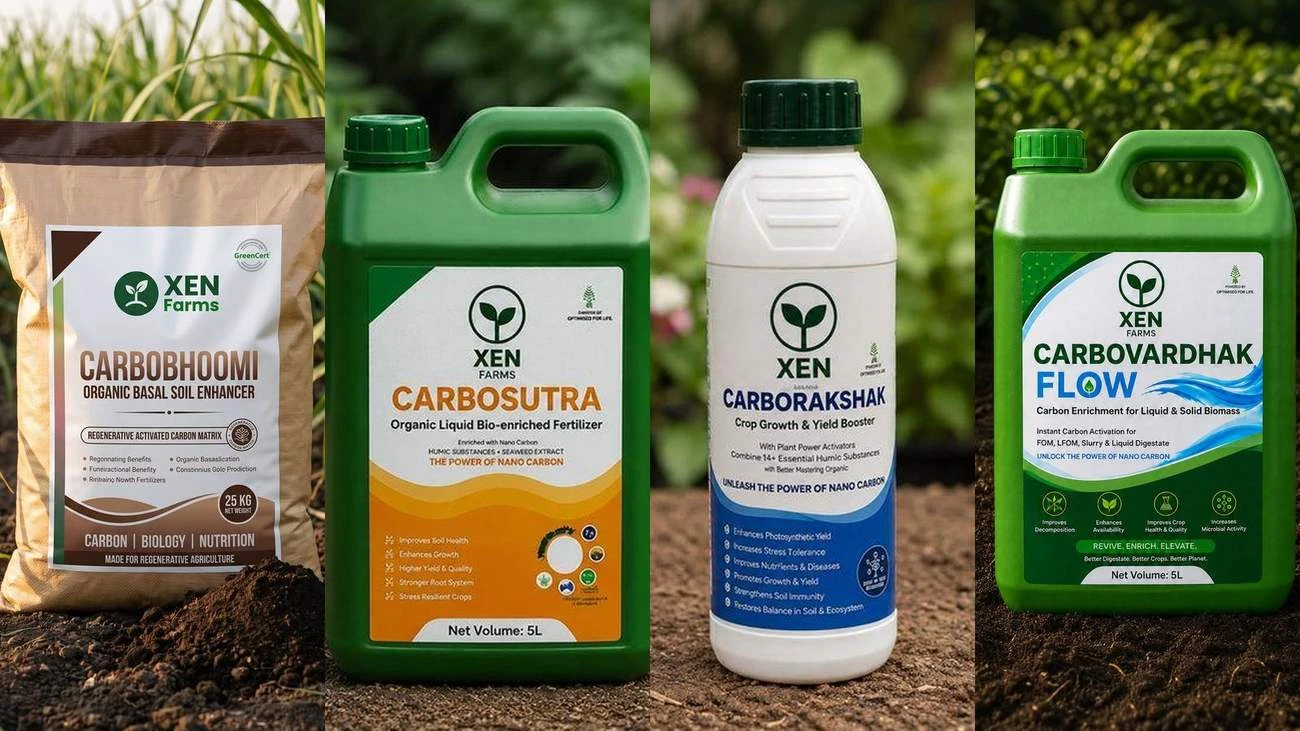
Carbobhoomi · Carbosutra · Carborakshak · Carbovardhak Flow
Field-proven from Season 1

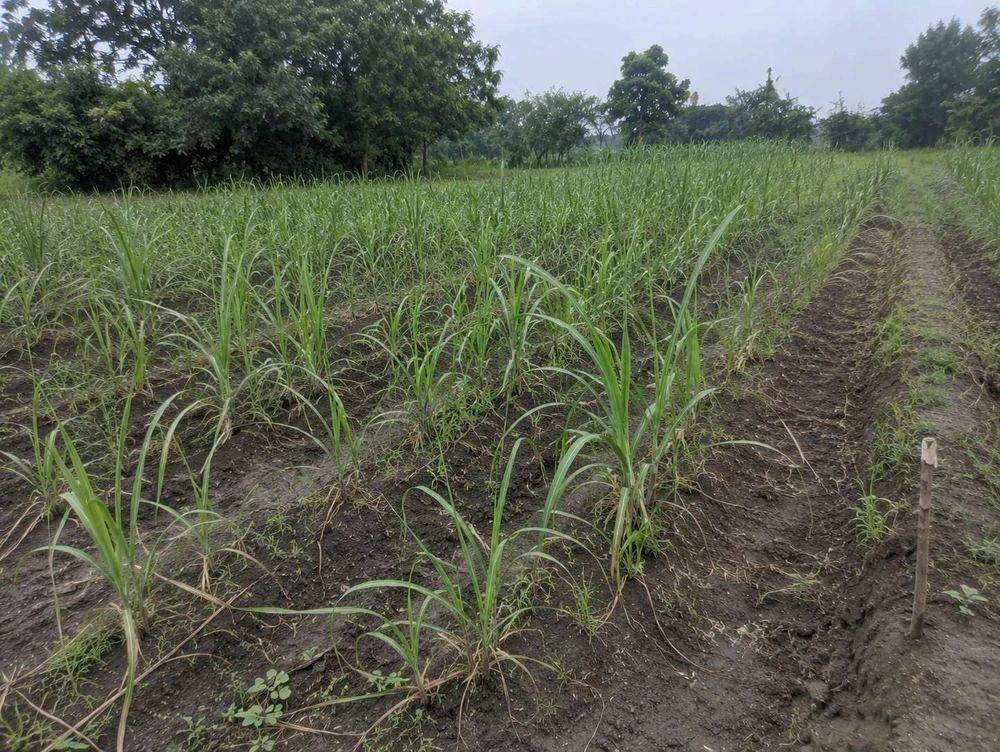
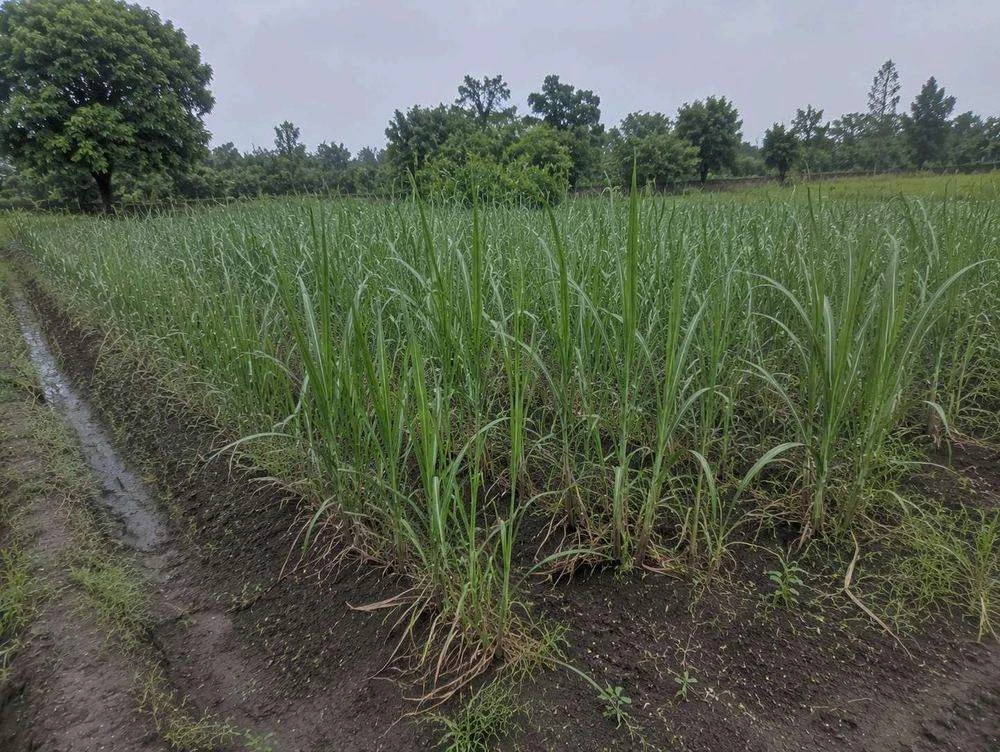
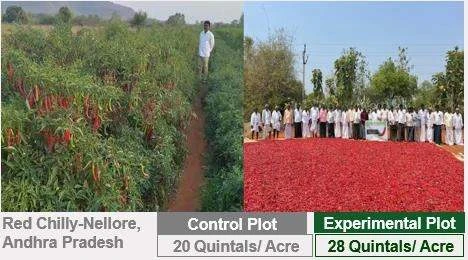
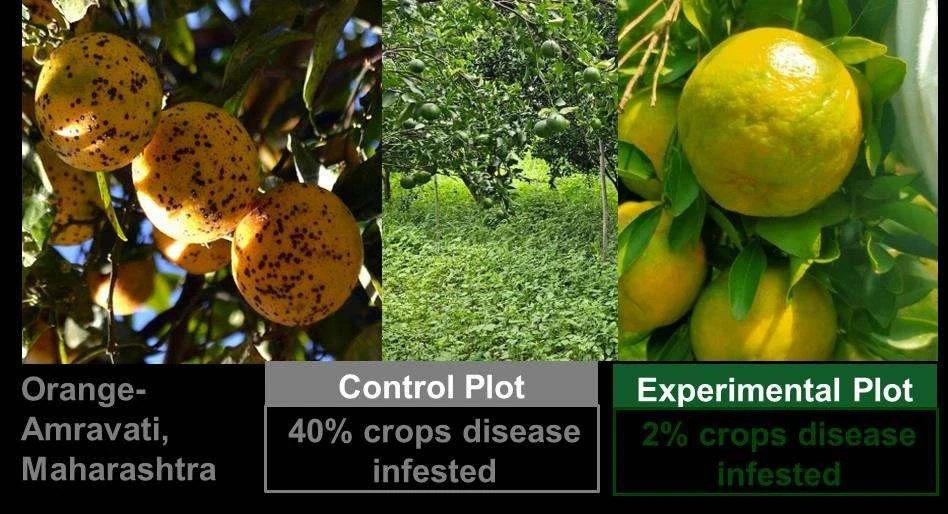
Equal plots, same day: control vs XEN across 11 crops and 14 states.

+28% to +75% yield · up to 59% lower input cost
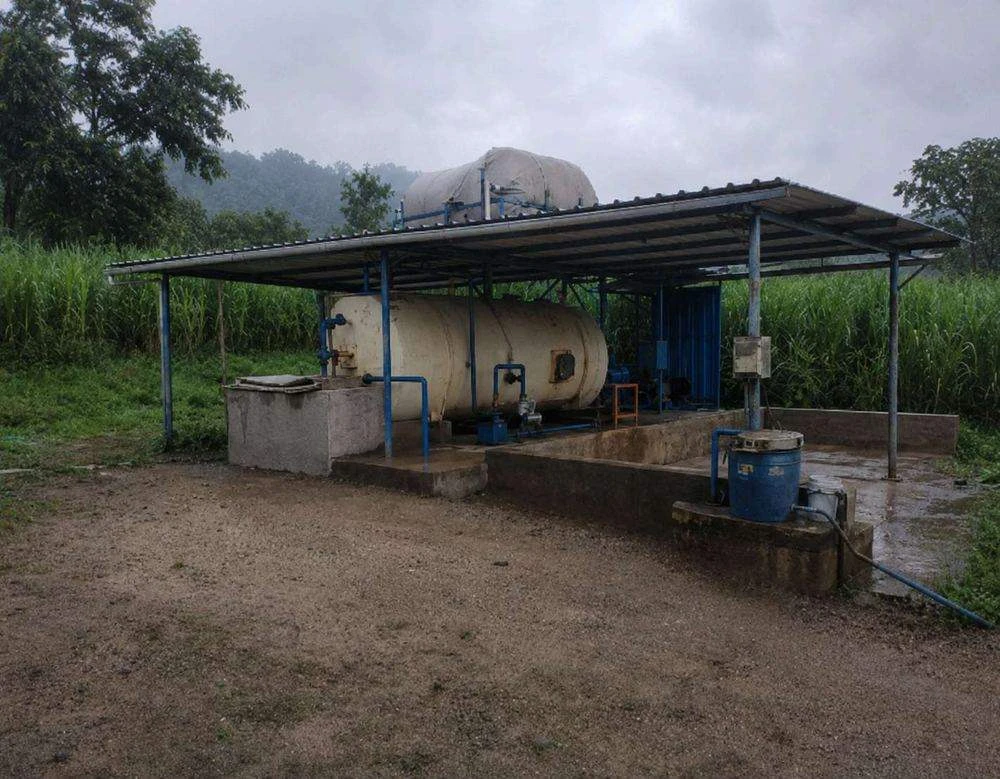
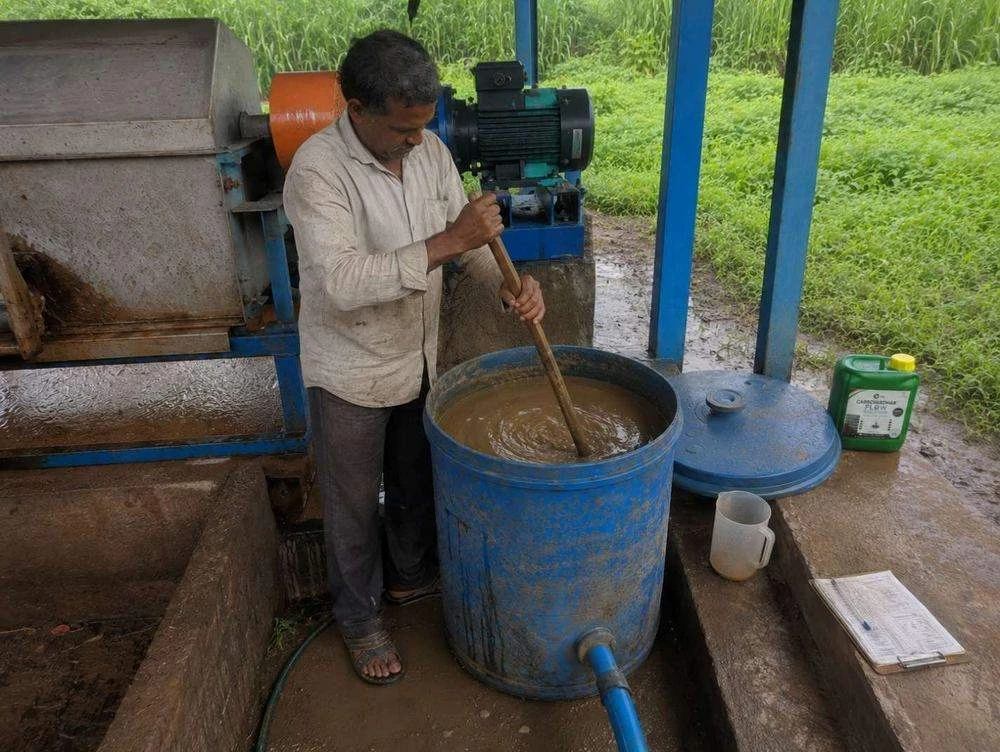
For CBG & biogas plants

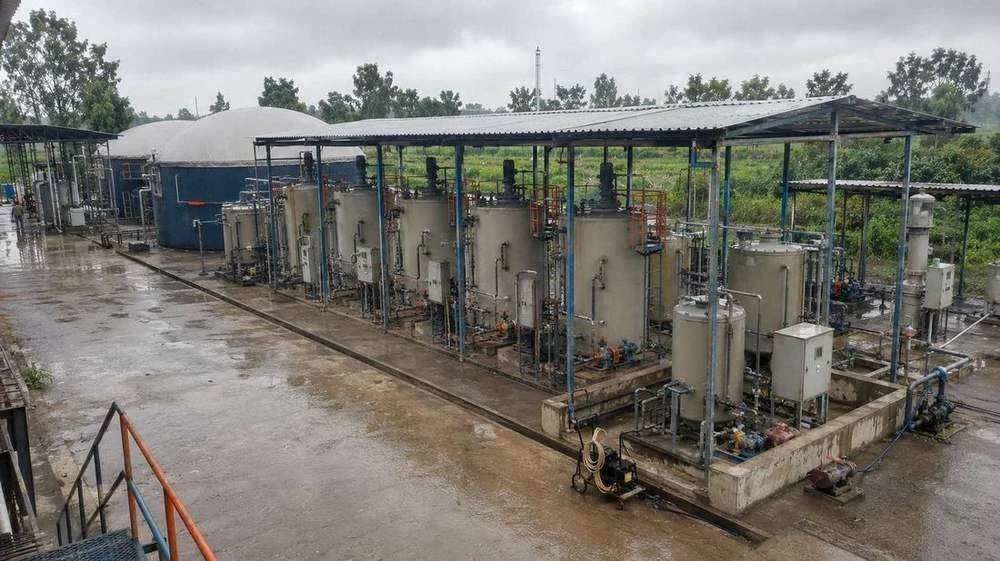
Digestate becomes premium regenerative fertiliser and a second value engine.

10% dose · 21-day cycle · zero manual handling
Circular bioeconomy · Haridwar

Cow dung to clean energy and regenerative fertiliser with a farmer producer organisation.

1 TPD biogas plant · sugarcane Co 0238
XEN Microenterprise Network

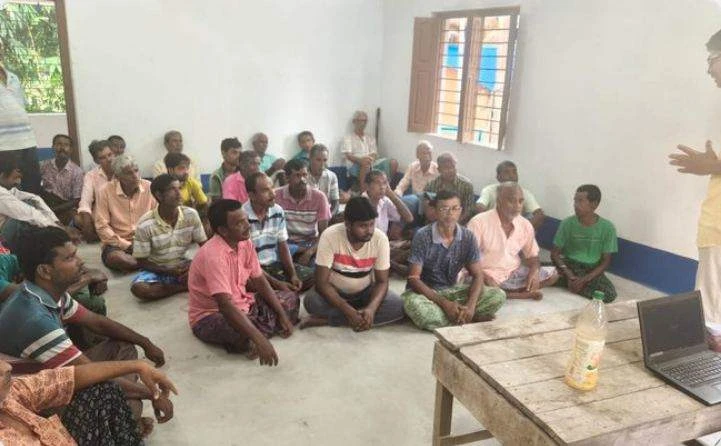
Village, block and district entrepreneurs bringing XEN to the farmer’s doorstep.

DLE · BLE · VLE
150+institutional pilots
5,000+farmers in data-led demonstrations
80+crops tested and validated
14states, 15 agro-ecological zones
₹5k–20kinput savings per acre, Season 1
10–30%average yield increase
Demonstrated results

What Season 1 looks like in the field.

Soil organic carbon 0.35% → 0.85%

in 15 months, more than doubling on the same plots

Krishna Sudha Academy of Agri-Ecology, Hyderabad & BAIF
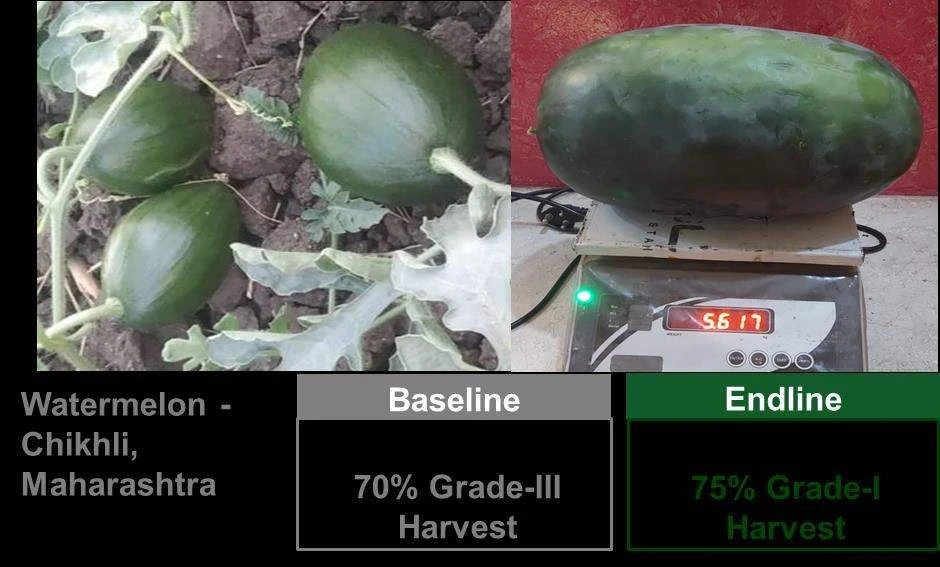
Grade-1 harvest 70% Grade-III → 75% Grade-I

watermelon, Chikhli. Apple Grade-I recovery rose from 61% to 82% in Srinagar

XEN field demonstrations, control vs XEN plots
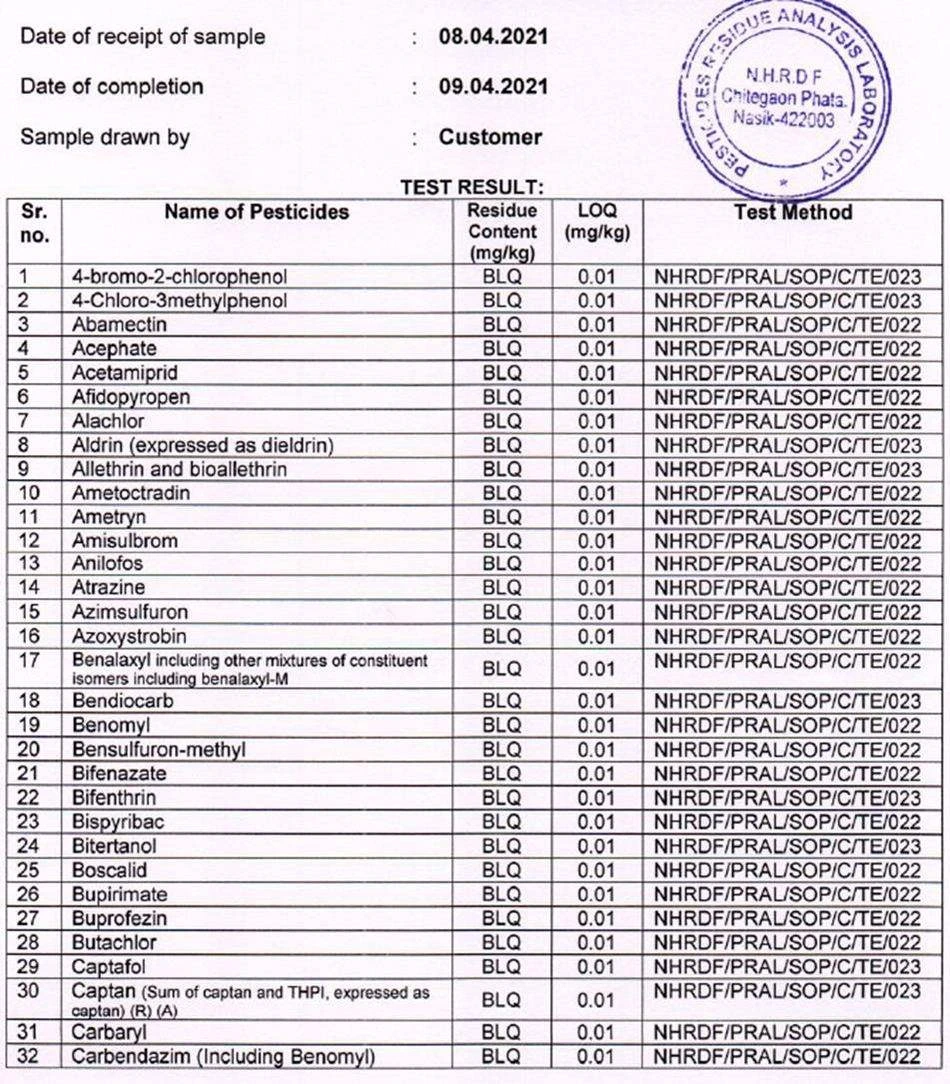
Residue-free produce 263 pesticides · all BLQ

every residue result below the limit of quantification

NHRDF Nashik residue analysis · NPOP organic certified

Demonstrated results from documented trials. Outcomes vary with crop, soil, climate and application programme.

Incubated, validated and supported by

The case for change

India’s soil and yields can’t wait.

Farmers are spending more on fertiliser and pesticide every season while their soil carbon keeps falling. Every route to yield now needs more inputs, and crops become less resilient.

1% → 0.3%

Soil organic carbon lost from Indian farmland in about 70 years

NRAA, Govt. of India
₹1.92L Cr

Spent every year on chemical fertiliser subsidies

Propping up the same system that depletes soil carbon through overuse of chemical fertilisers and pesticides.

Dept. of Fertilizers, GoI
10–35%

Harvest lost to heat, disease and erratic weather

Climate change could cut rice yields in South India by up to 17% by the 2080s.

Digital Sansad · ADB
89.4%

Of farming households own less than two hectares

They work with limited capital and rising spend on urea, DAP, 10:26:26, micronutrients and pesticides.

NSO Situation Assessment Survey
52%

Of rural households are in debt

Up from 47.4% in 2016–17, as chemical input costs keep climbing.

NABARD NAFIS 2021–22
3M tonnes

Of cow dung generated in India every day

Only a small share becomes standardised, market-ready crop input. The fertility is there; it is locked up.

NITI Aayog Task Force

Our solution

A carbon-smart regenerative input ecosystem.

One family of all-in-one organic inputs, so farms grow more, higher-quality, residue-free crops from Season 1. It works with the farmer’s own resources instead of replacing them with chemistry.

PILLAR 1

Unlock local fertility

By supercharging cattle dung, compost and other organic resources the farm already has.

PILLAR 2

Grow resilient crops

Through integrated carbon, nutrition and biology for both soil and plant.

PILLAR 3

Restore living soil

By rapidly rebuilding soil organic carbon, soil structure and soil function.

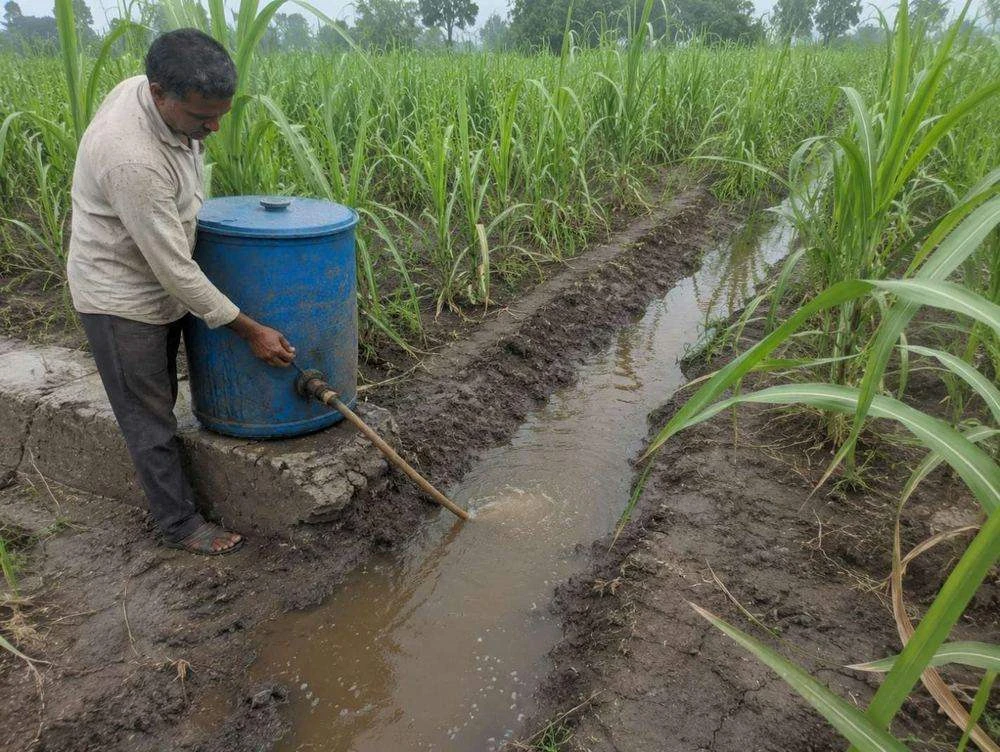
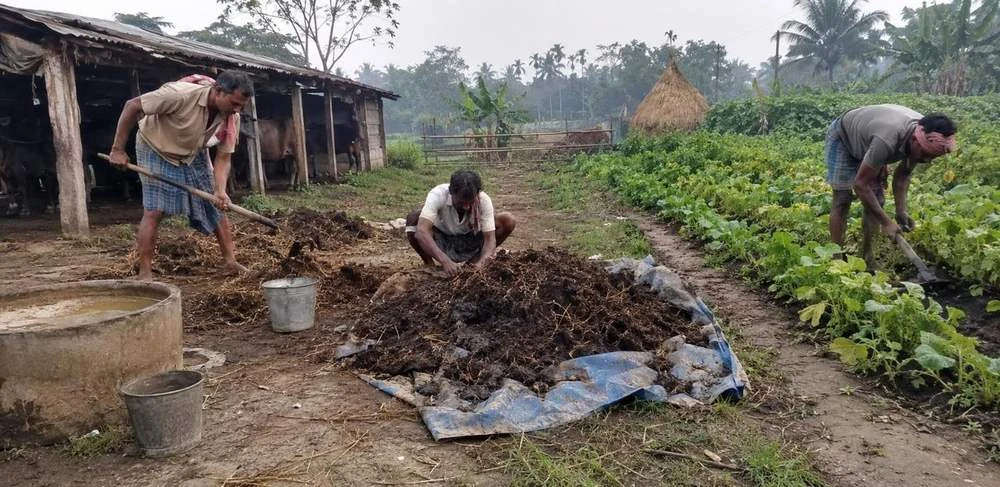
Farmers mixing cattle dung on a tarpaulin with a Carbovardhak can

Supercharging cattle dung

India’s cattle dung can power the world’s fertiliser future.

Carbovardhak doesn’t replace a farmer’s dung or compost. It adds carbon, nutrition and beneficial microbes, so the farm’s own waste becomes a premium all-in-one crop input.

  1. SourceCattle dung, compost, FOM/LFOM, Jivamrit, biochar manure or CBG digestate.
  2. CollectKeep the material in a dung or compost repository at the right moisture.
  3. SuperchargeAdd the prescribed Carbovardhak dose. Microbes break down lignin, cellulose and hemicellulose.
  4. GrowApply the darker, nutrient-dense enriched input in the field, at roughly a third of the usual manure volume.

Field-proven · Season 1

Equal plots. Same day. Measured results.

Each demonstration compares a conventional control plot with a XEN plot on the same farm. Tap a crop to see the full field data.

Results come from XEN field demonstrations and vary with crop, soil, climate and management. Input costs are per acre against the farmer’s conventional fertiliser and pesticide programme.

Hear from our farmers and partners

Outcomes in their own fields.

Farmers who ran XEN side by side with their usual programme, and the institutions that checked the results.

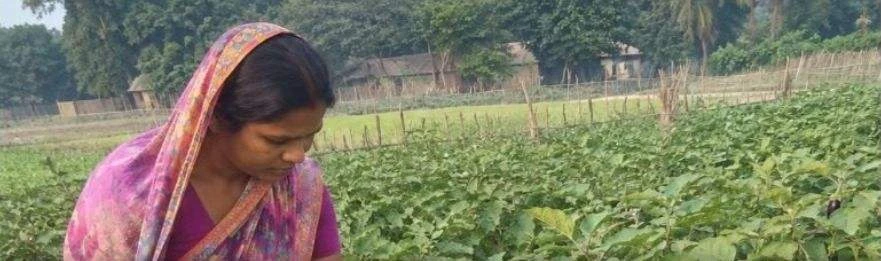
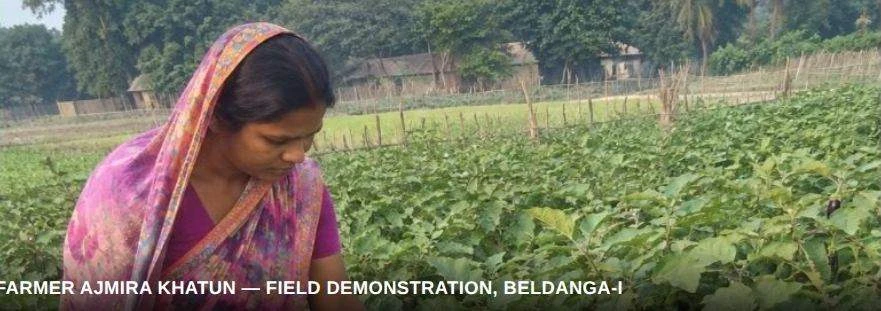
Ajmira Khatun in her brinjal field
Brinjal · soil & crop

Yield rose from 14,500 to 22,500 kg/acre, with glossy, near-seedless fruit and very little borer or blight.

Ajmira KhatunFarmer, Beldanga-I, West Bengal
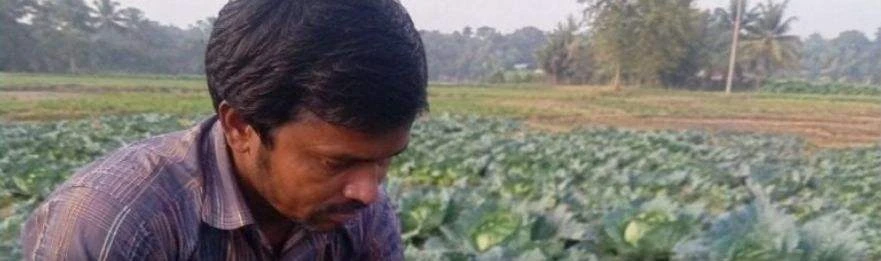
Joydeb Mondal in his cabbage field
Cabbage · crop quality

Uniform, compact heads, 1.8 kg up to 2.7 kg, with no fungicide needed on the XEN plot.

Joydeb MondalFarmer, Krishnanagar-I, Nadia
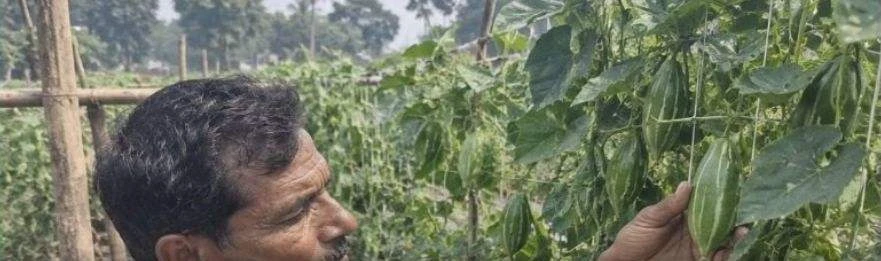
Pratap Ghorai in his pointed gourd field
Pointed gourd · yield

4,000 to 7,000 kg/acre, with fewer damaged leaves and more uniform fruit.

Pratap GhoraiFarmer, Krishnanagar, Nadia
Joydev Ghorai in his marigold field
Marigold · flowering

Faster growth, healthy buds and stronger flowering across 36 harvests.

Joydev GhoraiChakdikanagar Mahila FPC, Nadia
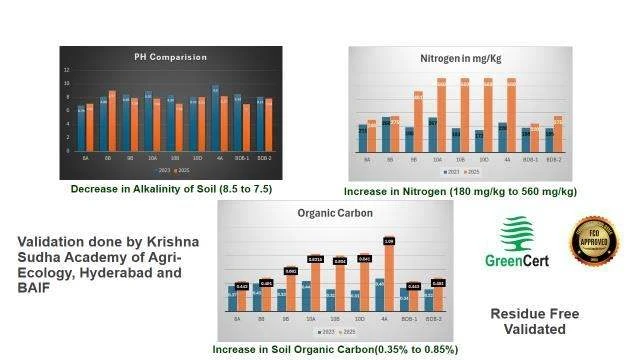
Soil validationKrishna Sudha Academy & BAIF

15-month soil study: organic carbon 0.35% → 0.85%, nitrogen 180 → 560 mg/kg, pH 8.5 → 7.5.

Satellite validationTechnoServe

Google Earth Engine mapping across 16 pomegranate farms in Nashik, Ahmednagar and Solapur.

Independent labIIT Roorkee

Independent characterisation of Carbovardhak-enriched LFOM from the Haridwar biogas plant.

Outcomes are recorded from documented XEN field demonstrations and partner evaluations.

Independently validated

Soil that measurably comes back to life.

A 15-month soil validation by Krishna Sudha Academy of Agri-Ecology, Hyderabad, and BAIF tracked the same plots before and after the XEN programme.

0.35→0.85%soil organic carbon
180→560nitrogen, mg/kg
8.5→7.5pH, toward neutral
NPOP organic certifiedFCO 1985 compliantNABL lab testedNHRDF residue-freeIIT Roorkee analysis
Charts showing decrease in soil alkalinity, increase in nitrogen and increase in soil organic carbon across trial plots

Who we work with

Multiple organic resources. Multiple markets.

Farmer Ajmira Khatun in her brinjal field

Farmers & FPOs

Lower input costs, Grade-I harvests and fertile soil from Season 1, with a written application plan.

Crop programmes →
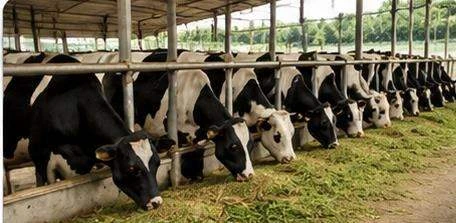
Dairy cattle at a cooperative shed

Gaushalas & dairy cooperatives

Turn cow dung into a standardised fertiliser product and a recurring income stream.

Gaushala–FPC model →
Row of automated LFOM enrichment tanks at a biogas plant

CBG & biogas plants

Convert FOM and LFOM digestate into premium regenerative fertiliser and a second value engine.

Digestate platform →
NGO field team meeting with farmers

NGOs, CSR & development institutions

Deliver soil restoration, climate resilience and rural livelihoods with measurable outcomes.

Start a programme →
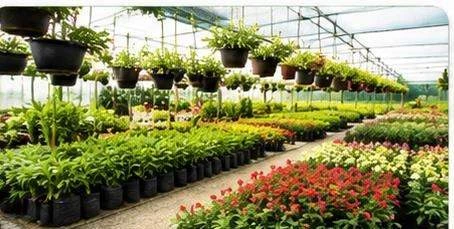
Commercial nursery with flowering plants

Nurseries, landscapes & commercial farms

Integrate soil, crop nutrition and resilience across managed growing systems.

Talk to us →
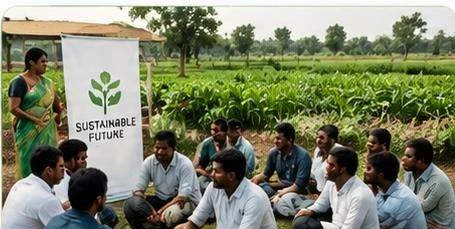
XEN farmer meeting in a village hall

Rural entrepreneurs

Run XEN distribution in your village, block or district, with training, field support and an app.

Join the network →

XEN Microenterprise Network

Become the XEN agri-entrepreneur of your area.

A three-tier network of village, block and district entrepreneurs brings XEN inputs to the farmer’s doorstep.

DLE
District Level EntrepreneurDistribution, warehousing & logistics
BLE
Block Level EntrepreneurBlock stock, training & VLE support
VLE
Village Level EntrepreneurLast-mile sales & farmer relationships

Backed by training, field support and the XEN mobile app.

Recognition

From research to field, recognised along the way.

2026

TISS iPreneur’26

1st place, all-India Social Venture Challenge

2022

Stanford Seed Spark

1st place in the regional cohort

Award

Krishi Jagran 40 Under 40

Agri-icon Award

Award

Dainik Jagran · Janhit Jagran

Winner

YourStoryHindustan TimesDainik JagranKrishi Jagran

Let’s turn waste into wealth. Let’s grow together.

Farmers, FPOs, gaushalas, CBG plants, institutions and investors — tell us what you’re working on.

Get in touch →
About XEN Farms

From space technology to the farmer’s field.

XEN Farms is one scalable regenerative mission: a carbon-smart, all-in-one organic input ecosystem for Indian agriculture. It was founded by an IIT Bombay engineer and a serial climate-tech entrepreneur, and is validated across 80+ crops and 15 agro-climatic zones.

Our vision

A living, regenerative acre for every Indian farm.

Our mission

Rebuild soil health and farmer income, from Season 1, through an affordable, carbon-smart organic input ecosystem delivered village by village.

Value

Soil first

We build living soil before we build a product. Carbon and biology first, chemistry never.

Value

Proof over promise

Every claim is validated on-farm, across 80+ crops and 15 agro-climatic zones, before it is sold.

Value

Farmer economics

Real, measured savings and yield gains from Season 1, not marketing maths.

Value

Built to scale

One regenerative mission, engineered into a rural distribution network across India.

Our journey

Fifteen years from the lab to the village.

2011

IIT Bombay

Mechanical engineering with a specialisation in thermal science, and a research project with BARC.

2011–2019

Food production in space

Consortium research linked to NASA and Whirlpool on growing food in space. 20+ international patents, a 10-member team and 15+ technology projects.

2013–2016

Studying agriculture across the world

The UK, USA, Japan, China, Taiwan, UAE, Mexico, Italy, Poland, Russia, Germany, Thailand, Ukraine and more.

2019

Back to India

Returned from the USA to build the XEN Farms team and its foundations.

2020

Products certified and licensed

Carbosutra and Carborakshak ready for field use, with certification and licences in place.

2021–2022

International collaboration

Academic work with Stanford, Harvard, Yale and the University of Chicago.

2021–2025

Institutions and field expansion

Work with the World Bank, Ministry of Rural Development, LBSNAA and the Ministry of Cooperation. Government exhibitions for 5,000+ farmers.

2024–2025

IFAD–UGVS, Uttarakhand

Gramotthan–REAP programme with 25,000+ beneficiaries, livelihood impact assessment, and work with North-East farmers through the Export Promotion Council.

2025–2026

Agreements and expansion

Partnerships with Syngenta Foundation, EIP, AEGF and BAIF, and agreements with the governments of Uttarakhand, West Bengal, Maharashtra and Jammu & Kashmir.

Our team

One team, one regenerative mission.

Diptesh Mukherjee

Diptesh Mukherjee

Founder & CEO · Business development & technology

  • IIT Bombay alumnus
  • Consortium projects with Whirlpool & NASA; 20+ international patents
  • System modelling, green technology, product launch and market research
  • Rural development work with the World Bank, MoRD, LBSNAA and IFAD
Prantik Sinha

Prantik Sinha

Founder & COO · Operations & supply chain

  • Serial entrepreneur; scaled a biogas solutions startup to $1.5M ARR
  • 6 years in waste management, climate action, biogas operations and export
  • Data science, operations strategy and project management
  • Projects with the Indian Army, Air Force, Navy, Total and more

Operations

Sayandeep DasNational Head – Operations

Network heads

Supriyo GhoshState Head – Community Management
Tirtha RitState Head – Community Management

Agronomy & impact

Rasik VariyaChief Agronomist
Urmi SahaPrincipal Impact Scientist

HR & communications

Payel PandaHead – HR, Communications & Social Media
Dipika RoyAssociate – Social Media
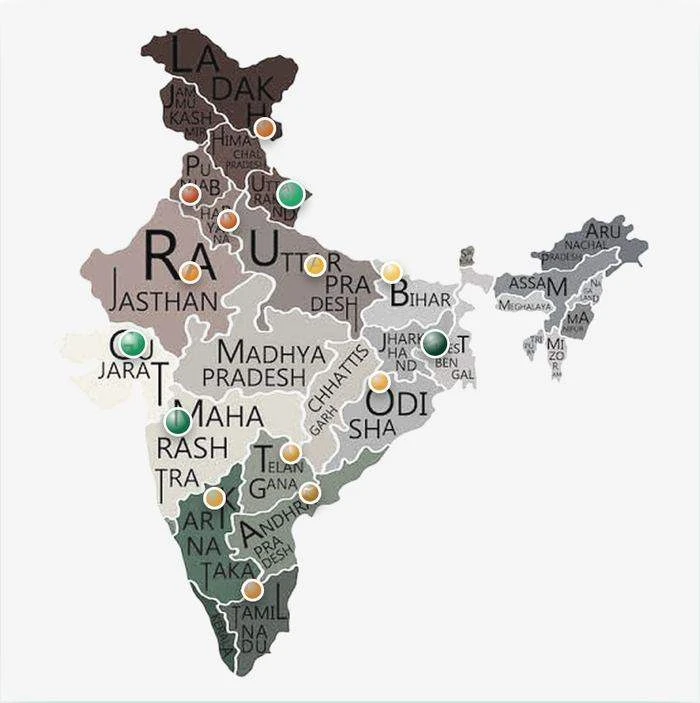
Map of India marking XEN Farms commercial and pilot states

Footprint

Growing across India, one state at a time.

Commercial presence · 4 states

West BengalMaharashtraGujaratUttarakhand

Pilot evaluations · 11 states

PunjabHaryanaHimachal PradeshRajasthanUttar PradeshBiharOdishaTelanganaAndhra PradeshKarnatakaTamil Nadu

Field work also includes Jammu & Kashmir (apple) and the North-East through the Export Promotion Council.

Partners

15+ strategic partnerships. 150+ institutional pilots.

Our partners are helping us add scale and speed.

Incubated & accelerated by

  • IRMA – iSEEDMain incubation centre
  • Pusa Krishi, ICAR-IARIAgri research & technology
  • TISS Incube FoundationSocial enterprise support
  • VillgroEnterprise & network
  • Stanford SeedSeed Spark programme
  • BAIFCARES Accelerator
  • Visa FoundationGreen R Accelerator
  • LIC HFL – IRMASocial Trailblazer

Programmes, MoUs & customers

  • Evergreen Innovation Platform (EIP)10-year partnership
  • Syngenta Foundation IndiaMarket Access Program
  • TechnoServeFarmer & market linkage
  • IFADJaivik Uttarakhand
  • UGVS – REAPGramotthan project
  • SETU AayogGovt. of Uttarakhand
  • Isha FoundationPartner
  • Livelihood AlternativesFarmer linkage, Odisha
  • SayTreesProject in Andhra Pradesh
  • Grant Thornton BharatWest Bengal exhibition

Validation & evaluation

  • AEG FoundationField-level evaluation
  • Krishna Sudha AcademyFarming practice evaluation
  • IIT RoorkeeLab analysis
  • J-PALVillgro IMMpact
  • Department of Science & TechnologyGovt. of India

Academic collaborations & media

  • Harvard Business SchoolAcademic collaboration
  • Yale School of ManagementStudent exchange
  • Chicago BoothImpact analysis
  • YourStory · Hindustan Times · Dainik JagranMedia coverage
Technology

Carbon, nutrients and microbes, in one technology.

At the core of every XEN product is the Regenerative Carbon Matrix: an activated long-chain carbon structure that feeds microbes, carries nutrients to the root zone and holds water, so carbon, nutrition and biology work as one system.

A biological carbon engine

Three interacting layers unlock, activate and retain.

01 · Unlock biomass

Lignocellulose deconstruction

Specialised microbial consortia break down lignin, cellulose and hemicellulose, releasing carbon and nutrients that would otherwise stay locked in slowly decomposing biomass.

LIGNIN · CELLULOSE · HEMICELLULOSE
02 · Bioactivate

Complete nutrition + microbes

Decomposers, nutrient mobilisers, carbon-fixing bacteria and chemoautotrophs multiply, supported by 109 herbal extracts inspired by Vriksha Ayurveda.

109 HERBAL EXTRACTS · PHYTO-BIOFUNCTION
03 · Retain + exchange

Regenerative carbon matrix

A porous carbon matrix holds nutrients and water, gives microbes a habitat and exchanges nutrients with the root zone as the plant needs them.

CARBON-FIXING BACTERIA · CHEMOAUTOTROPHS
Illustration of raw biomass becoming dark, nutrient-dense soil through microbial activity

Three kinds of carbon

Carbon that is designed, not incidental.

Most organic inputs contain carbon. XEN designs it, integrating three carbon pools that each do a different job.

Labile carbon

Feeds microbes now

Readily available energy that starts microbial activity immediately after application.

Humic carbon

Holds water & nutrients

Humic and fulvic substances chelate nutrients and reduce their loss from the root zone.

Stable carbon

Restores soil long-term

Durable carbon that builds soil organic matter, structure and water-holding capacity over seasons.

Inside the matrix

Activated long-chain carbon: the core of soil regeneration.

Carbon stabilisation

Stabilises organic carbon and raises soil organic carbon.

Carbon food matrix

Cellulose, glucose and fructose feed every microbial strain so they thrive together instead of competing.

Humic complex architecture

Humic and fulvic substances chelate nutrients and improve availability.

Microbial habitat

A porous home for a diverse, functional microbial consortium.

Moisture lock

Bacteria bond with soil moisture to anchor carbon in the root zone and improve water holding.

Electron shuttle

Supports microbial respiration and speeds up nutrient transformation.

Nutrient carrier

Chelates and carries macro and micronutrients to the root zone.

Root-zone activation

Better root growth, nutrient uptake and rhizosphere vitality.

Five engineering pillars

Science engineered. Nature enhanced. Value unlocked.

Carbon

Carbon stabilisation & nutrient retention

Activated long-chain carbon, higher carbon density, more soil organic matter, moisture retention.

Biological

Decomposition & nutrient cycling

Cellulose and lignin degraders, nitrogen fixers, phosphate and potassium solubilisers.

Biochemical

Humic, fulvic, amino acids, enzymes

Humic architecture, peptides, organic acids, natural enzymes, chelated nutrients.

Botanical

Functional botanical extracts

109 Vriksha Ayurveda extracts, phytonutrients and stress-resilience compounds.

Market

Quality, branding & channels

Standardised quality, buyback assurance, institutional partnerships, nationwide distribution.

Carbovardhak · lab-tested fertility stack

The numbers behind the matrix.

41.11%Total organic carbon (dry basis)
12.23%Combined NPK (dry basis)
1.86×10⁹CFU/g microbial load
70.87%Organic matter
18.93%Humic acid
19.82%Silica
N 6.48%P₂O₅ 2.96%K₂O 2.79%pH 7.98Ca 1,028.4 mg/kgMg 1,261.8 mg/kgS 5,614.9 mg/kgMn 104.7 mg/kgAs, Cd, Cr, Hg, Pb, Ni below detection

Microbial consortium

Functional groups that work together.

Anaerobic-to-aerobic adaptation. Microbes are acclimatised in a controlled hybrid environment so they survive and stay active in open soil.

Microbial coexistence technology. A carbon food matrix of cellulose, glucose and fructose prevents competition between strains.

Functional groupExamplesRole
Cellulose degradersCellulolytic bacteriaAccelerate decomposition
Lignin degradersLigninolytic microbesBreak recalcitrant biomass
Nutrient mobilisersPSB, KSB, KMBImprove P & K availability
Nitrogen fixersAzotobacter, AcetobacterBiological N contribution
Biocontrol & rootsTrichoderma, Pseudomonas, MycorrhizaPlant resilience, root uptake

Enrichment process

How Carbovardhak turns waste into wealth.

The same three biological stages, activate, multiply and stabilise, run at farm scale and at industrial scale. Choose a protocol.

DAY 0 · ACTIVATE50%Carbon charging

Dilute and mix the first half of the dose uniformly through the dung. Cover and rest. Decomposers start on the lignocellulose.

DAY 21 · MULTIPLY25%Biological enrichment

Turn and aerate the batch, apply the next quarter, remix and cover. Carbon-fixing and nutrient-mobilising microbes multiply.

DAY 31 · STABILISE25%Nutrient integration

Apply the final quarter, turn uniformly and verify readiness: brownish-black, about 40% moisture, no odour.

READY · APPLY~⅓Less material, more value

Roughly 1,000 kg/acre of enriched manure replaces about 3,000 kg of ordinary FOM, with 67% less handling.

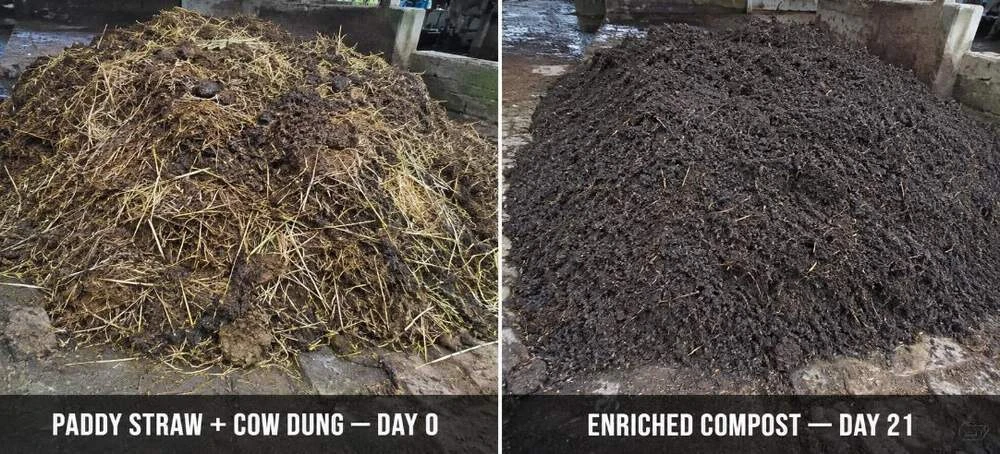
Typical dose: 50–100 L Carbovardhak per tonne of cattle dung (500 kg FOM + 35 L Carbovardhak + 35 L water → 570 kg enriched output). Paddy straw and dung compost runs 20–35 days with three turnings.

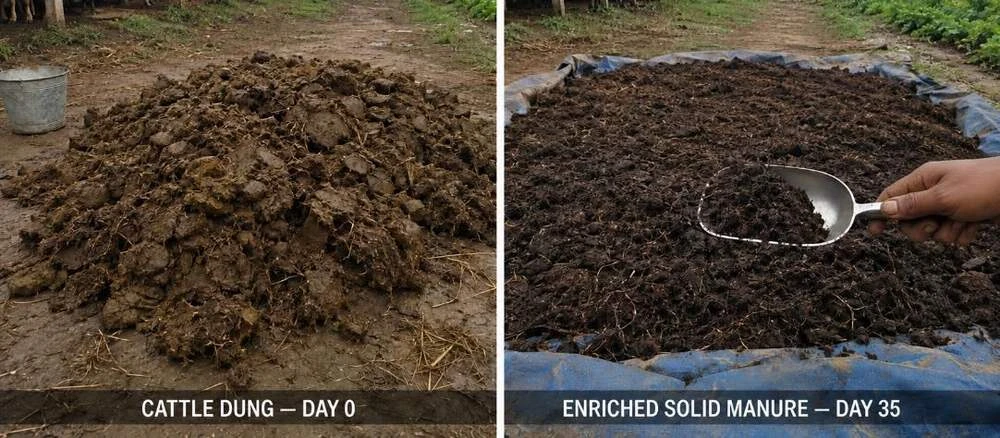
Cattle dung at day 0 next to enriched solid manure at day 35
Cattle dung, day 0 → enriched solid manure, day 35
Paddy straw and cow dung at day 0 next to enriched compost at day 21
Paddy straw + dung, day 0 → enriched compost, day 21
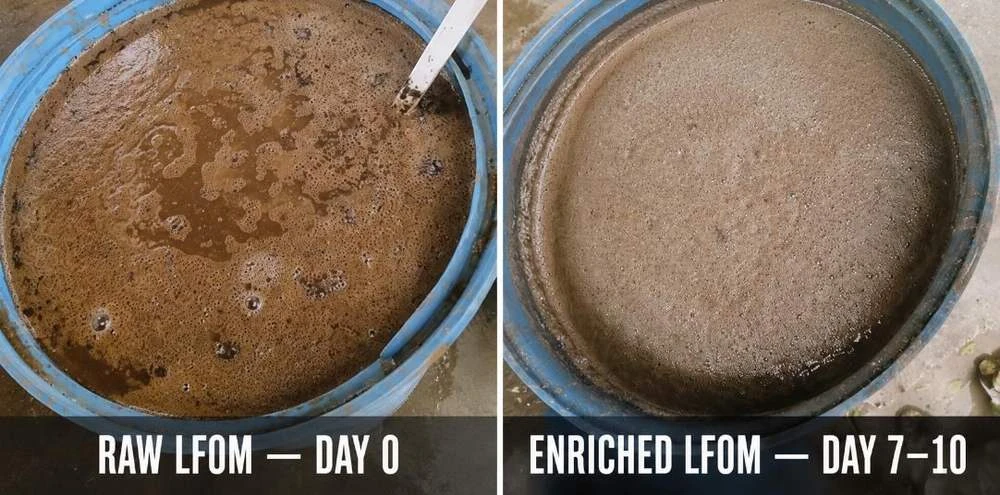
Raw LFOM at day 0 next to enriched LFOM at day 7 to 10
Raw LFOM, day 0 → enriched LFOM, day 7–10

Lab-verified enriched manure

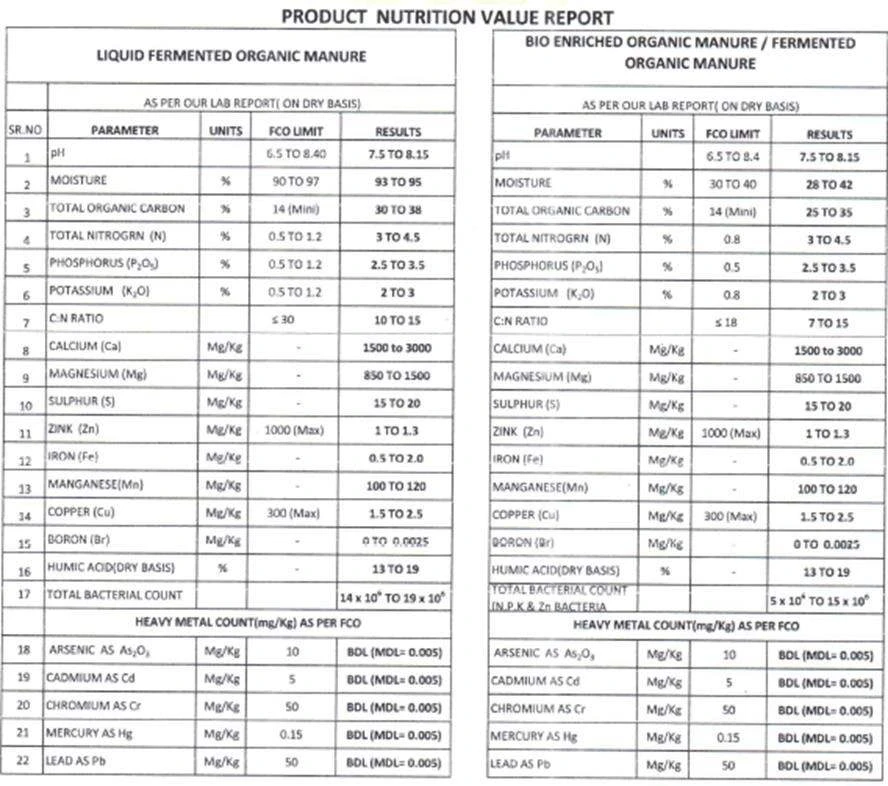
Far above FCO limits, same parameters, side by side.

ParameterLiquid FOM · FCO limitXEN enriched liquidSolid FOM · FCO limitXEN enriched solid
Total organic carbon (%)14 min30–3814 min25–35
Total nitrogen (%)0.5–1.23.0–4.50.83.0–4.5
Phosphorus, P₂O₅ (%)0.5–1.22.5–3.50.52.5–3.5
Potassium, K₂O (%)0.5–1.22.0–3.00.82.0–3.0
C:N ratio≤3010–15≤187–15
pH6.5–8.47.5–8.156.5–8.47.5–8.15
Humic acid, dry basis (%)—13–19—13–19
Heavy metals (As, Cd, Cr, Hg, Pb)As 10 · Cd 5 · Cr 50 · Hg 0.15 · Pb 50Below detectionsameBelow detection

Source: Product Nutrition Value Report, dry-basis laboratory results. Micronutrients (Ca, Mg, S, Zn, Fe, Mn, Cu, B) also reported.

Carbon-Centric Digestate Valorisation Platform™

One CBG plant. Two value engines.

A CBG plant is both an energy facility and an organic-resource processing facility. Energy is recovered as gas; carbon and nutrients continue through the digestate. The second value chain begins after digestion, not after disposal.

A · Energy ledger

Biogas → CBG

gas volume × methane recovery × CBG realisation

Primary plant revenue. XEN does not touch this process.

B · Digestate ledger

FOM + LFOM → premium fertiliser

FOM/LFOM quantity × verified quality × market offtake

More than 90% of the biomass leaving a digester comes out as digestate. Today it is mostly sold as low-value bulk manure.

<10% value realised

The 90% opportunity

Over 90% of digestate’s potential value is untapped.

Raw digestate has nutrients in low-available form, unstable carbon, inactive microbes, odour and pathogens, and gives farmers inconsistent results. Carbovardhak Flow activates that hidden potential and turns it into a new profit centre for the plant.

Digestate Engineering™ process

From residue to premium regenerative fertiliser.

01Feedstock conditioning

Optional size reduction, moisture adjustment, homogenisation.

02Anaerobic digester

Biogas production runs unchanged.

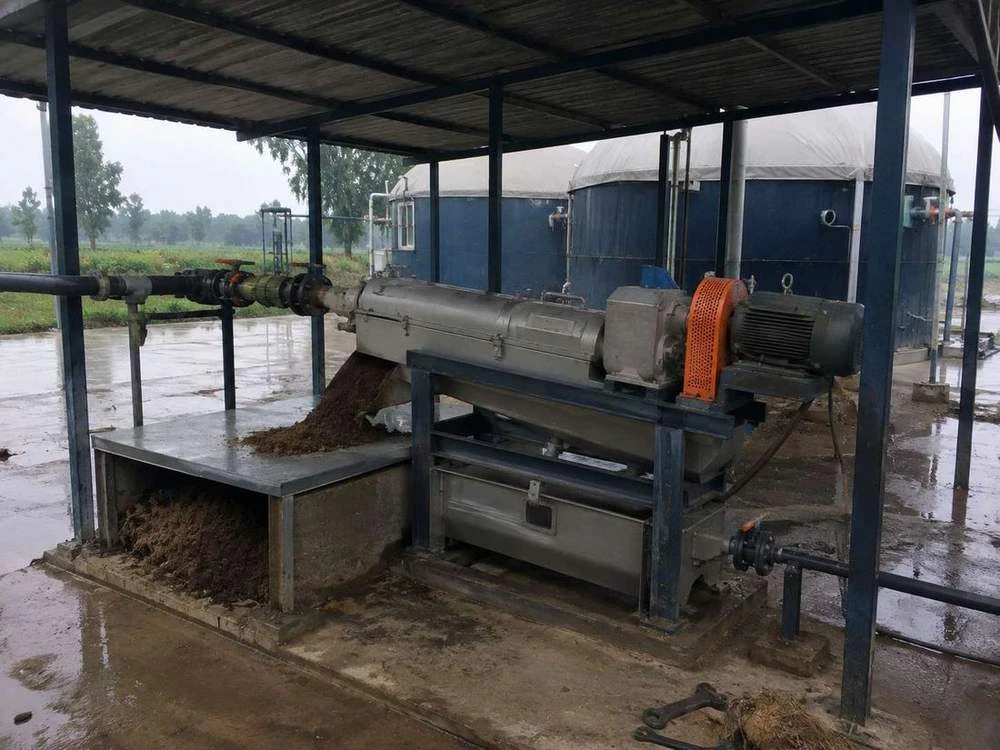
03Separator

Solid FOM and liquid LFOM separated.

04FOM / LFOM

Characterised: moisture, TS, pH, EC, carbon, NPK.

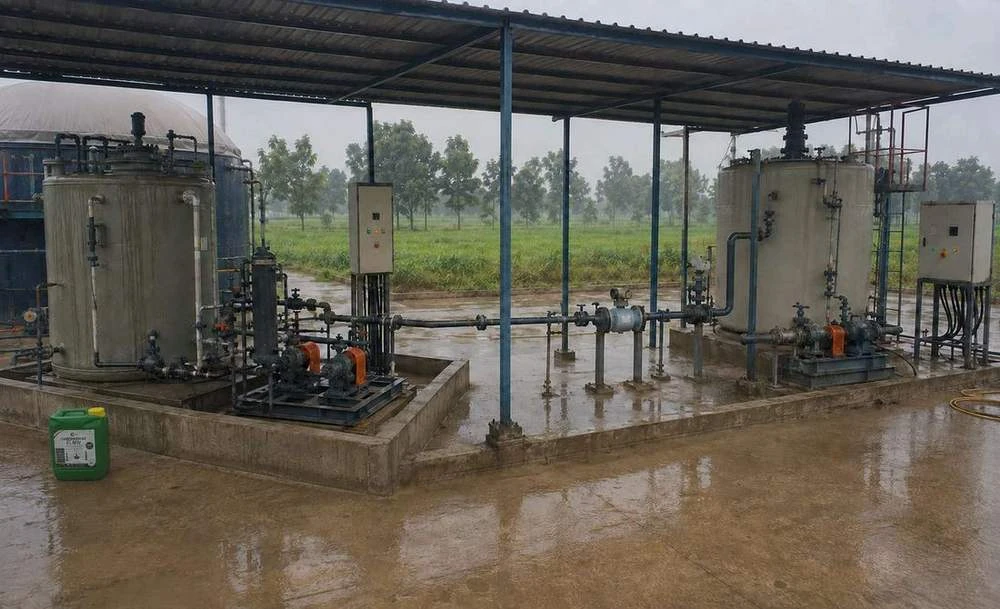
05Add 5–15% Carbovardhak Flow

By volume for LFOM, by weight for FOM.

06Thorough mixing

Uniform distribution of matrix, microbes and nutrients.

07Biological activation

48 hours to 10 days (21-day cycle for industrial LFOM).

08Premium fertiliser

High-carbon, nutrient-rich, microbially alive and QC-released.

Quality-control framework

One batch. One auditable decision.

Gate 01 · Characterise

Incoming FOM / LFOM

Feedstock sourceVolumeMoisture/TSpH · ECOrganic carbonC:NNPK
→ ACCEPT / CONDITION
Gate 02 · Control

During enrichment

DoseDilutionMixing timeTemperatureRetentionHomogeneity
→ CONTINUE / CORRECT
Gate 03 · Verify

Final enriched product

OC · OMNPKHumicMicrobial countStabilityPathogensHeavy metals
→ RELEASE / HOLD

Every batch carries a Digital Batch Passport: batch number, date and shift, feedstock mix, digestate and Carbovardhak quantities, mixing and retention, operator log, sample ID, lab result and release status.

Retrofit · downstream by design

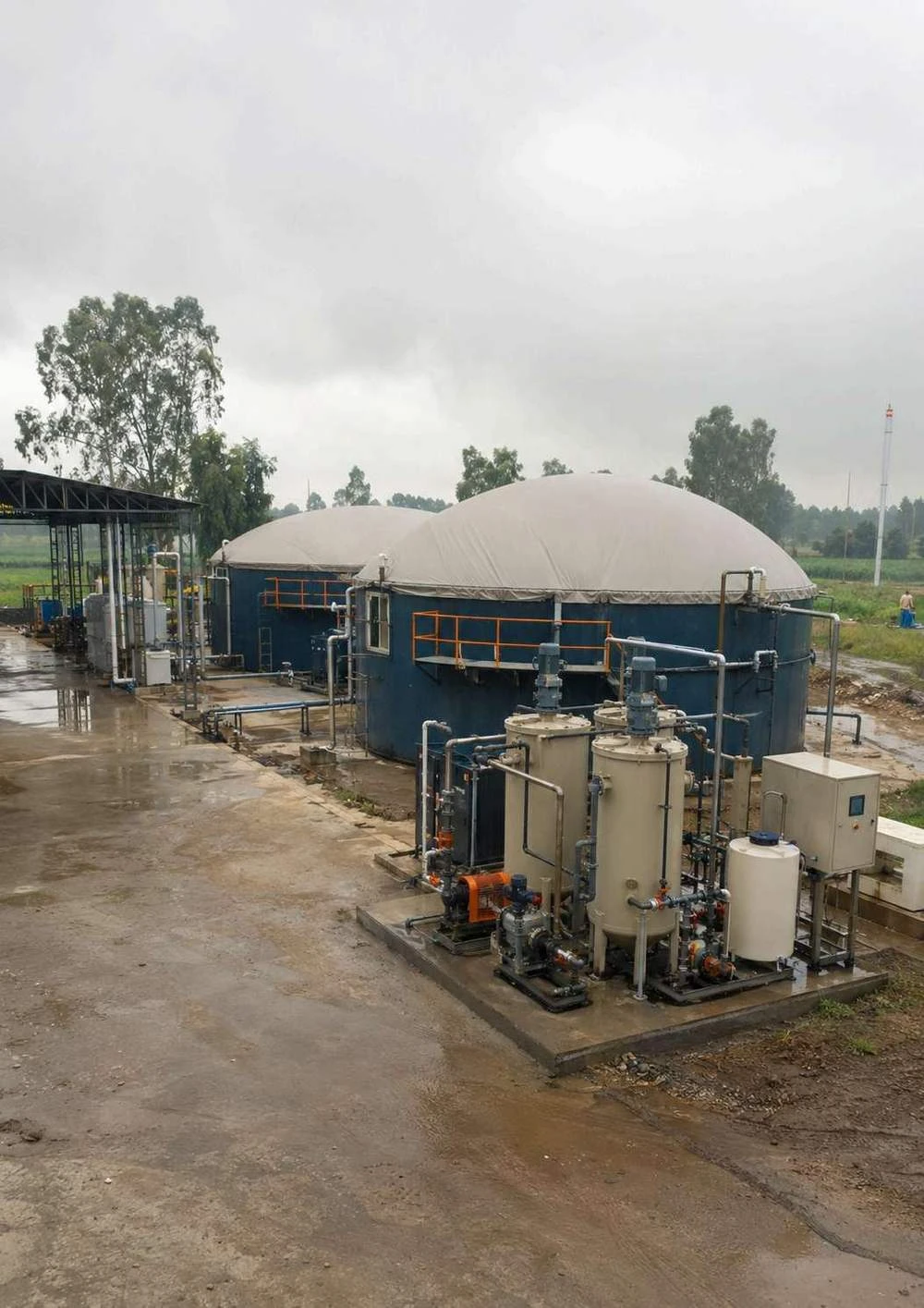
Biogas production stays exactly as it is.

  • No addition to the digesterNo interference with digestion or methanogenesis.
  • Starts after separationSeparate FOM and LFOM modules, matched to daily digestate output.
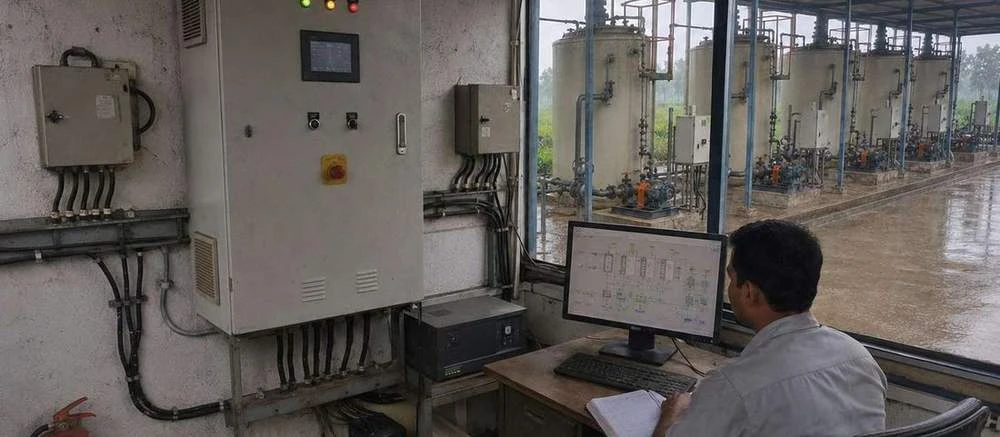
  • Metered and recordedCovered processing, drainage control, SCADA/PLC integration where feasible.
  • Phased rolloutPilot batch → validated SOP → modular retrofit → continuous operation.
Screw-press separator at a biogas plant Enrichment tank with dosing pump Operator at a SCADA control screen Enrichment skid beside a biogas dome

Four Revenue Engines™

From a single revenue stream to a multi-revenue enterprise.

1

CBG revenue

Continued core income from industries, city gas distribution and mobility.

2

Premium fertiliser

Enriched FOM and LFOM for agriculture, horticulture, landscaping and export.

3

Institutional markets

Bulk and contract supply to FPOs, corporates and government programmes.

4

Environmental services

Future carbon credits, ESG partnerships and ecosystem restoration.

Pilot phase 1

Baseline

Map feedstock and digestate mass balance, characterise untreated FOM and LFOM.

Pilot phase 2

Process

Untreated control vs Carbovardhak-treated batches; preliminary SOP.

Pilot phase 3

Evidence

Control-vs-treatment field plots, farmer and buyer feedback.

Pilot phase 4

Expansion

Freeze dosage and equipment, QC release system, offtake strategy, more plants.

Gaushala–FPC value chain

One local resource. Three rural beneficiaries.

Gaushalas become decentralised fertiliser-production centres, and FPCs become last-mile regenerative input centres for smallholder farmers.

01Gaushalas

Collect and segregate dung; supply space and trained operators.

02Carbovardhak enrichment

31-day controlled cycle unlocks carbon, nutrients and biology.

03Quality assurance

Moisture, maturity, composition and batch traceability.

04FPC enterprise

Procure, store, distribute and provide crop guidance.

05Shareholder farmers

Apply 500 kg/acre under crop-specific protocols.

06Regenerative outcomes

Lower costs, higher crop revenue, healthier soils.

Gaushala · per tonne produced

₹2,275Benefit–cost 1.15

Cost ₹14,725 · revenue ₹17,000. A recurring income from dung instead of a disposal burden.

FPC · per tonne distributed

₹3,000Benefit–cost 1.18

Cost ₹17,000 · revenue ₹20,000. A new regenerative-input business vertical.

Farmer · per acre at 0.5 tonne

₹4,000 savedBenefit–cost 2.2–3.4

₹10,000 vs ~₹14,000 conventional inputs, plus ₹8,000–20,000 extra crop revenue. 90% less manure to handle.

ParameterExisting enrichment practicesCarbovardhak-based enrichment
ApproachComposting, vermicomposting or one microbial consortiumIntegrated biological carbon, nutrition and microbial enrichment
DecompositionNatural, often slow and variableSpecialised consortia accelerate lignin, cellulose and hemicellulose breakdown
MicrobesDecomposers or selected N-fixers/PSBDecomposers, nutrient mobilisers, carbon-fixing bacteria, chemoautotrophs
CarbonPresent but rarely designedLabile, humic and stable carbon in a regenerative matrix
Herbal functionalityUsually absent109 herbal extracts inspired by Vriksha Ayurveda
ApplicationSeveral tonnes per acreAbout 0.5–1 tonne per acre
Crop responseGradual, needs supplementary inputsDesigned for measurable response from the first season
StandardisationVaries by feedstock and locationBatch records, SOPs, readiness checks, lab testing

Validation & quality

Certified. Registered. Independently validated.

Soil lab · 15 months

Krishna Sudha Academy & BAIF

0.35→0.85%soil organic carbon
180→560nitrogen mg/kg
8.5→7.5soil pH
Hyderabadmulti-plot trial

Farmer soil report · 30 months

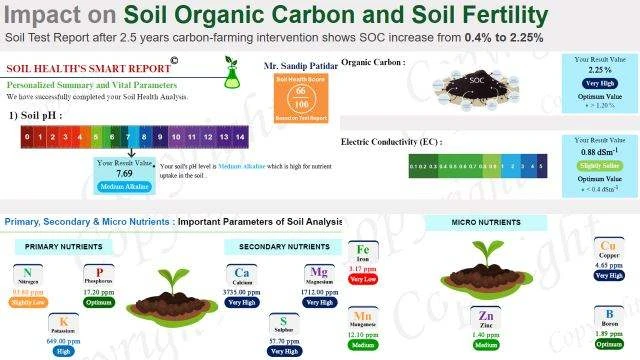
Sandip Patidar, Pune

0.4→2.25%soil organic carbon
66/100soil health score
7.69soil pH
2.5 yrscarbon farming

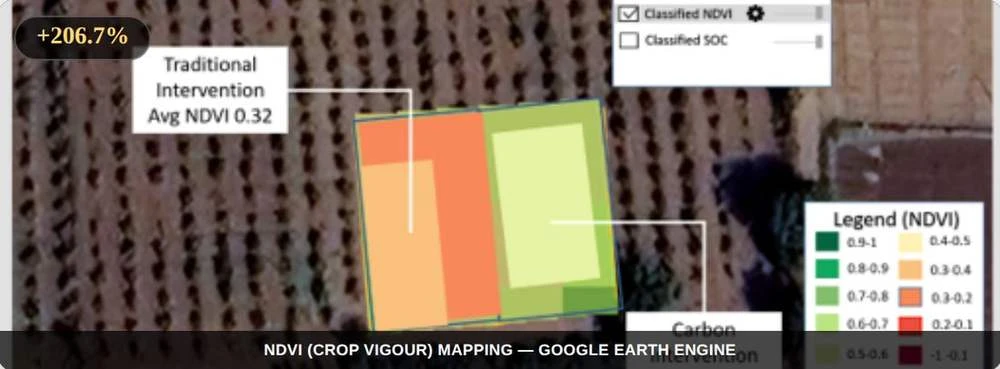
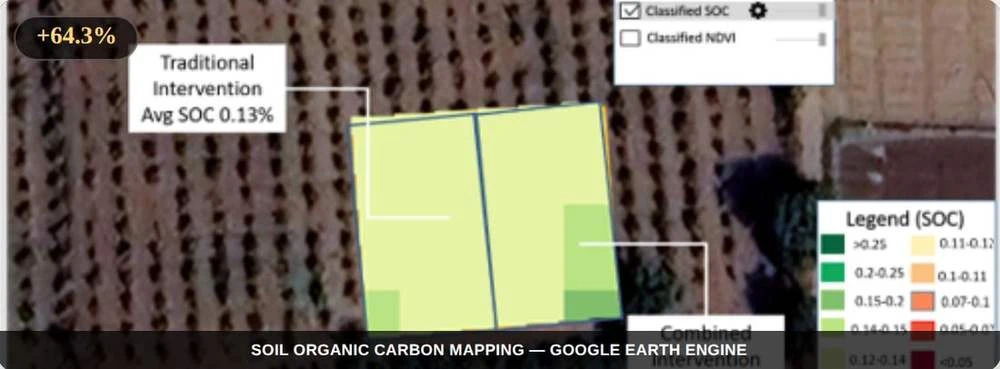
Satellite · Google Earth Engine

16 pomegranate farms with TechnoServe

up to +206.7%NDVI crop vigour
up to +64.3%soil organic carbon
NashikAhmednagar · Solapur
Cross-verifiedby TechnoServe
Satellite NDVI map comparing traditional and XEN plots Satellite soil organic carbon map comparing traditional and XEN plots
NPOPOrganic certification · GreenCert · IM/307211049
FCO 1985Compliant fertiliser registration (amended 2021)
NHRDF NashikResidue analysis: 263 pesticides, all below limit of quantification
NABLAccredited laboratory test reports
IIT RoorkeeIndependent laboratory testing & analysis
EIP · USAField demonstration report with Syngenta Foundation & AEGF
Gazette of IndiaMinistry of Agriculture notification
USDAOrganic standard documentation
Product nutrition value report table
Product Nutrition Value Report (dry basis)
NHRDF pesticide residue test results, all below limit of quantification
NHRDF residue test, Nashik · all results BLQ
Products

Not a chemical substitute. A complete nutrition system.

One family of carbon-based organic inputs covering the full crop cycle: soil conditioning, root nutrition, foliar protection and manure enrichment. Positioned around jaivik kheti, it works with the farmer’s own inputs.

NPOP certifiedFCO compliantResidue-free60% less irrigation water30–50% higher SOC after year 1
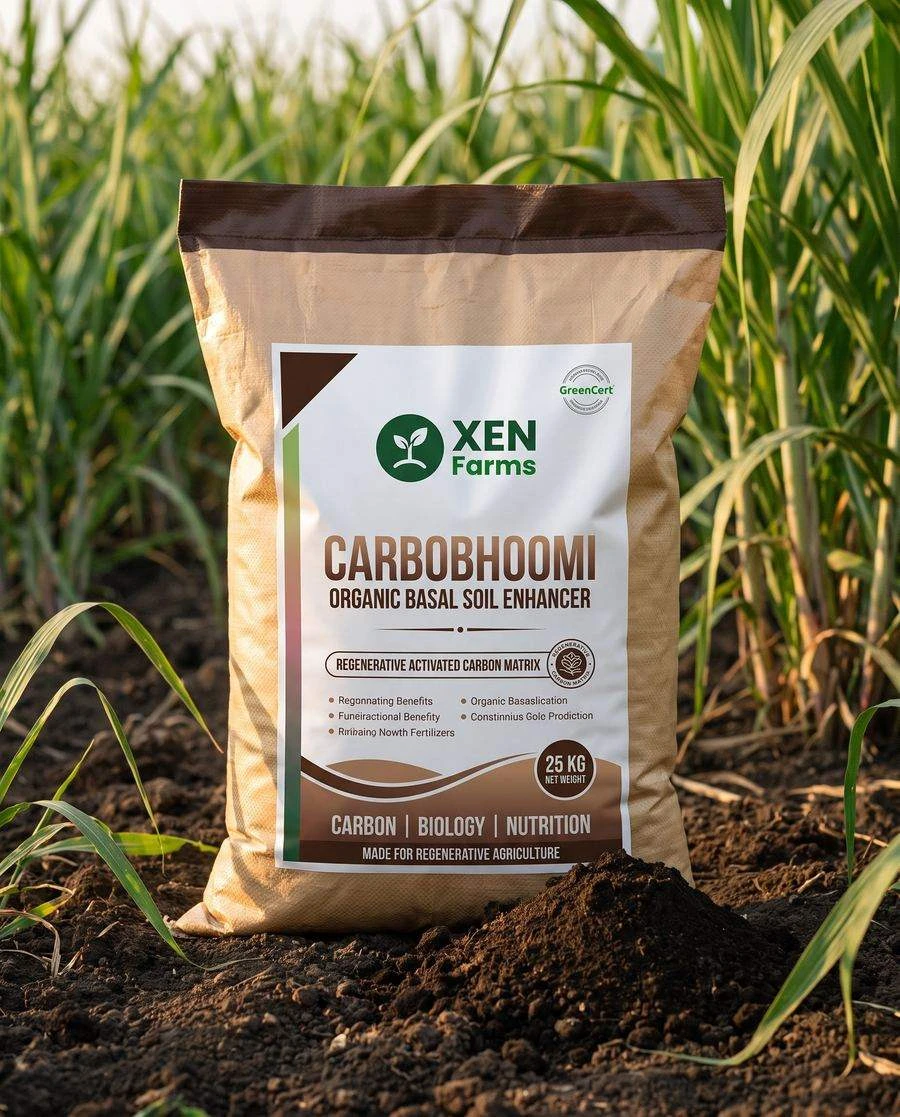
Carbobhoomi bag in a fieldStep 1 · Build the foundation
Organic basal soil enhancer

Carbobhoomi

Builds living soil structure from the roots up.

A bio-enriched organic carbon matrix with macro and micronutrients for base soil nutrition and structure, made from organic solid residue reclaimed during slurry filtration. Nothing is wasted.

40%organic carbon
3.5–4.5%total nitrogen
8–12%humic acid
1.5–2.5%K₂O
  • 100% organic NPK alternative to chemical basal fertilisers
  • Builds SOC and structure: porosity, water holding, balanced pH
  • PSB, KMB, Mycorrhiza, Trichoderma, Pseudomonas free up locked phosphorus
  • Minimises nitrogen deficiency and protects young crops early
  • 15 natural ingredients, agronomist-formulated
  • Ultra-efficient dose replaces bulky chemical bags
Dosage

75 kg/acre as a basal dose during land or bed preparation. Spread evenly and mix in with a rotavator. Horticulture: repeat every 6 months.

NPOP safeFCO approvedPSB enriched25 kg bag
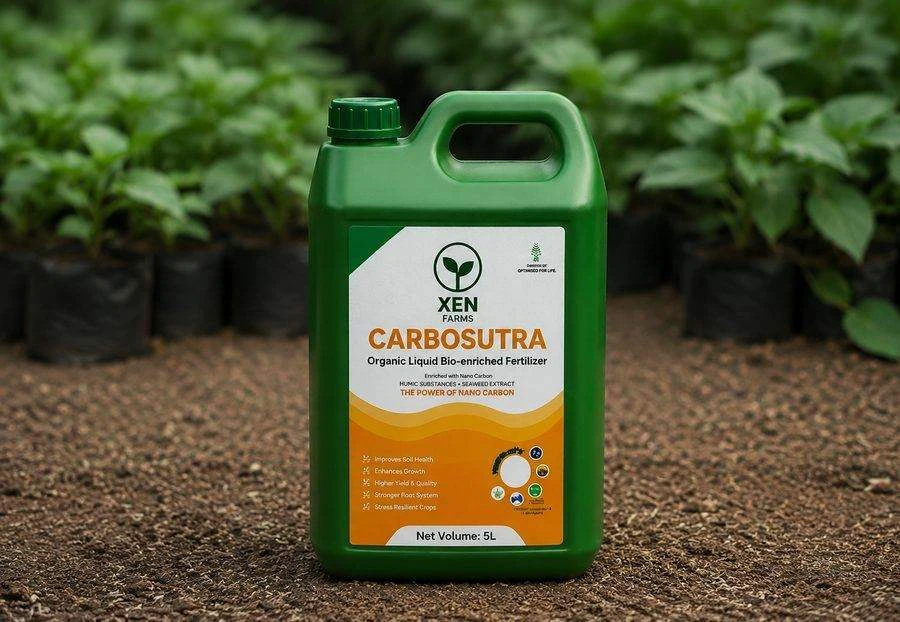
Carbosutra 5 litre canStep 2 · Nourish the crop
Organic liquid bio-enriched fertiliser

Carbosutra

Revives soil and unlocks nutrients instantly. The power of nano-carbon.

A regenerative carbon matrix and multi-strain microbial consortium for rapid results, complete nutrient availability and a soil fertility boost, delivered through a sustained-release mechanism.

10%NPK, ~8× typical organic liquids
40%organic carbon, ~3× FCO minimum
12–15%humic acid
5-strainmicrobial ecosystem
  • Mycorrhiza, Trichoderma, Pseudomonas, Acetobacter, Azotobacter, plus KMB & PSB
  • Built-in bacterial food matrix so every strain thrives together
  • Moisture-Lock Technology anchors carbon in the root zone
  • Rich in gibberellic, humic, fulvic and amino acids
  • All micronutrients and 100+ bio-actives
  • 100% pathogen-free, verified batch after batch
Dosage

15 L/acre per application, diluted in water, via flood irrigation, drip or soil drenching. Most seasonal crops take 4–6 applications. Trees: 100 ml–1 L per plant every 3 months.

NPOP safeFCO approvedResidue-free5 L can
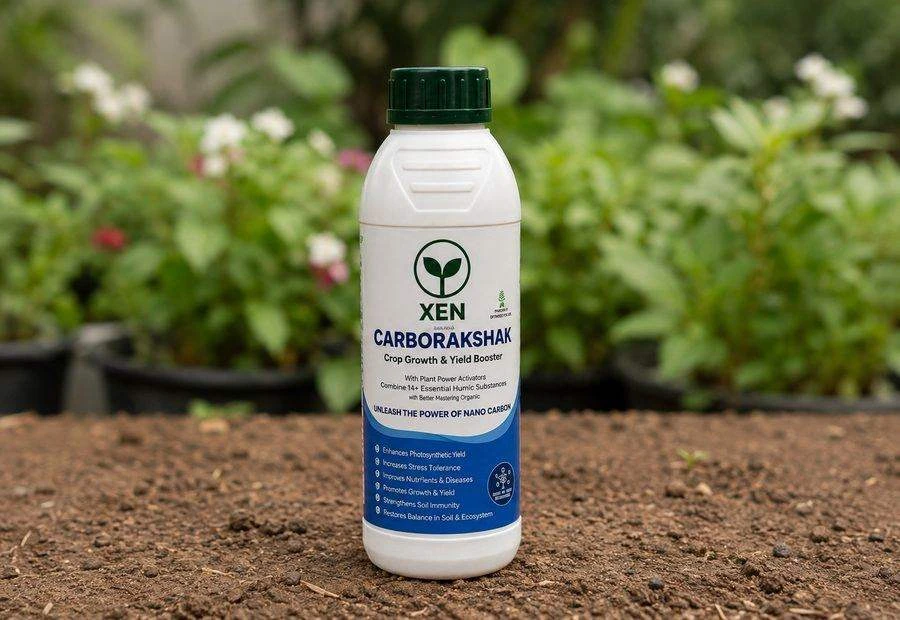
Carborakshak bottleStep 3 · Protect performance
Liquid premium organic foliar spray

Carborakshak

Shields crops from pests and diseases, and promotes flowering and fruiting.

A nano-carbon foliar spray with herbal extracts, organic silica and plant hormones for pest and disease resilience and growth stimulation. An organic alternative to routine pesticide, insecticide and vitamin sprays.

35%organic carbon
109+herbal extracts
263pesticides tested, all BLQ
70–100%less chemical pesticide
  • Boosts flowering and helps prevent flower drop
  • Enhances fruit set and controls fruit drop
  • Organic silica strengthens cell walls and leaf cuticle
  • Natural plant hormones: auxins, gibberellins, cytokinins
  • Improves shine and grade, supporting Grade-I harvests
  • Bee-friendly; builds immunity and climate resilience
Dosage

50–75 ml per 15 L backpack sprayer, sprayed evenly on leaves and stems at critical stages. Seasonal total about 4.5 L/acre over 2–3 sprays.

NPOP safeFCO approvedZero residue · BLQField-validated in 8 trials
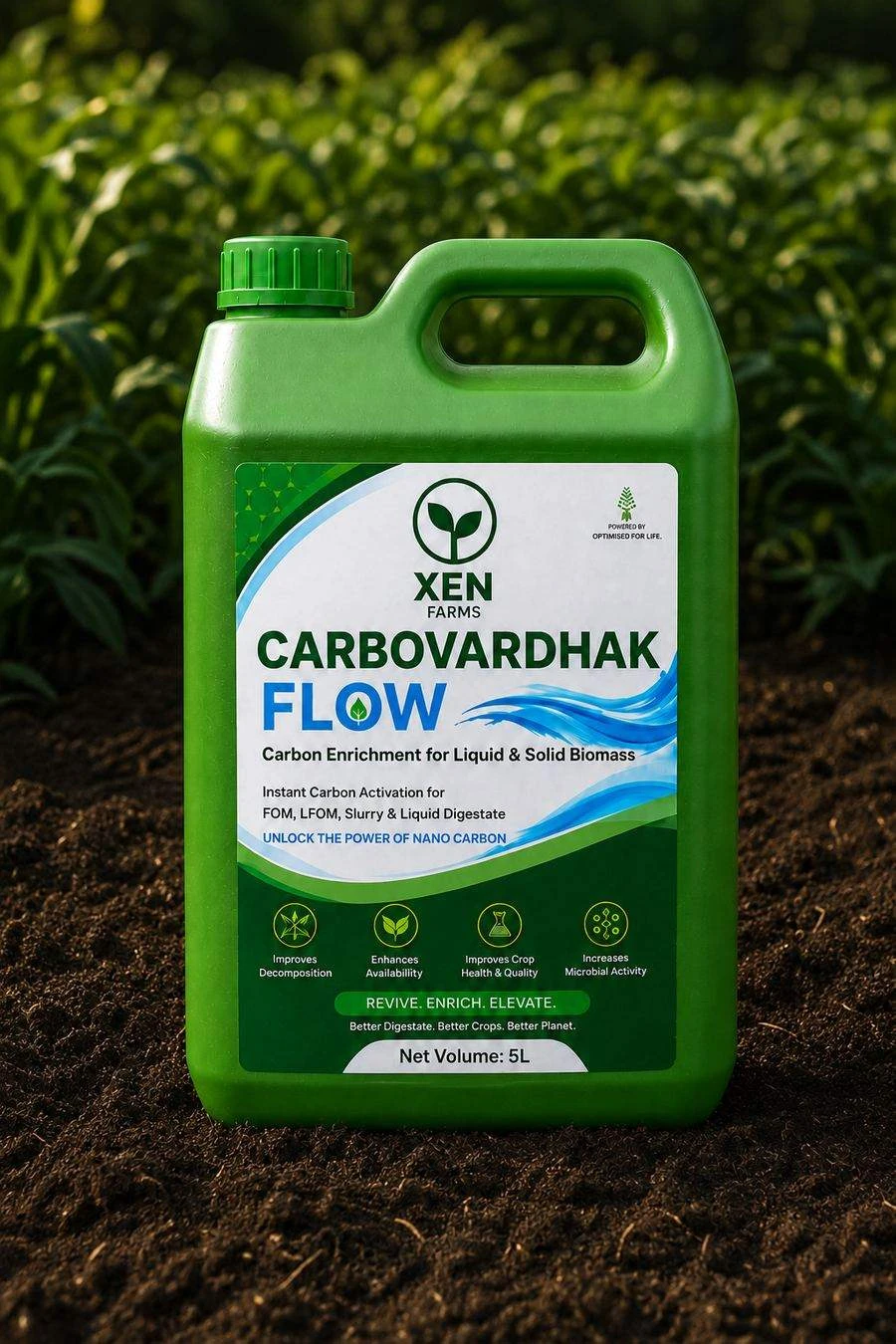
Carbovardhak Flow 5 litre canEnrich · Supercharge your manure
Organic manure & digestate enrichment concentrate

Carbovardhak Flow

Turns any manure into a lab-verified, all-in-one organic fertiliser.

A concentrated liquid that enriches cattle dung, FOM, LFOM, vermicompost, Jivamrit, poultry and goat manure, biochar manure and CBG digestate with carbon, nutrients and microbes. It is an enrichment concentrate, not applied directly to the field.

41.11%total organic carbon
12.23%combined NPK
1.86×10⁹CFU/g microbes
18.93%humic acid
  • Faster, cleaner breakdown: less composting time, odour and pathogen load
  • Works with any base material a farm or plant already has
  • Upgrades inferior compost to a high-grade organic input
  • Rich in organic and humic acids for nutrient chelation
  • Carbon-fixing bacteria and 100+ herbal ingredients
  • Cuts manure volume needed per acre by about two-thirds
Use

Mix 5–20% into FOM, vermicompost or Jivamrit during composting (50–100 L per tonne of dung). Industrial LFOM: 10% of batch over a 21-day cycle.

NPOP safeFCO compliantManure concentrate5 L / 10 L packs

Recommended dosage chart

Find the programme for your crop.

Per-acre schedules for Carbosutra (soil), Carborakshak (foliar) and Carbobhoomi (basal). Choose a crop group.

Adjust for crop type, canopy size and soil condition. Any additional NPK or micronutrient need is decided by soil test. Follow the crop-specific schedule from your XEN agronomist or VLE.

Proven across India’s farms

Tested and verified in 80+ crops.

Cereals

Wheat, paddy, sorghum (jowar), millet, bajra, barley, ragi, maize

Pulses & oilseeds

Masoor, moong, toor/arhar, chana, urad, rajma, soybean, groundnut, mustard, sesame, sunflower, linseed

Cash & plantation crops

Tea, coffee, cotton, tobacco, banana, sugarcane, coconut, arecanut

Roots, tubers & spices

Potato, sweet potato, elephant yam, taro, radish, carrot, turmeric, ginger, garlic, cumin, coriander, black pepper, chilli, cardamom, saffron and more

Vegetables

Onion, tomato, capsicum, green chilli, gourds, okra, cucumber, drumstick, leafy greens, cabbage family, peas, brinjal, pumpkin

Fruits & flowers

Watermelon, papaya, grapes, mango, chiku, guava, citrus, pomegranate, apple, dragon fruit · marigold, rose, jasmine, chrysanthemum, gerbera and more

XEN Microenterprise Network

Creating multifold income with village-level micro-entrepreneurs.

Individual entrepreneurs are XEN Farms’ primary distribution channel. They reach farmers directly, take ownership of their territory and grow with it. Do you want to lead the transformation of your area’s agriculture and build your own future?

Apply to join →1,000+ enquiries across West Bengal

Why entrepreneurs

Direct to the farmer, not through institutions first.

Legacy channel

Institutions first

FPCs, co-operatives and agri-retail chains: slower onboarding, shared margins, indirect farmer relationships.

XEN’s primary channel

Individual entrepreneurs · VLE / BLE / DLE

Direct-to-entrepreneur, faster territory rollout, dedicated last-mile ownership.

Faster rollout

New territories go live in weeks, not quarters.

Direct farmer relationships

No dilution of message, pricing or margin between XEN and the farmer.

Scalable territory model

Village → block → district replicates cleanly in new regions.

Local ownership

Entrepreneurs are invested in their own territory’s success and reputation.

The three-tier network

District oversees block. Block supports village.

A clear reporting cascade at every level, replicated block by block and district by district.

Live example · West Bengal

Hooghly district (DLE) → Goghat-I block (BLE) → Raghunathbati village (VLE)

Territory target

1,000 bigha
farmland served per gram panchayat within one year

DLEDISTRICT LEVEL

District Level Entrepreneur

Oversees district-wide distribution, warehousing, bulk stocking and logistics, and supports the BLEs beneath.

BLEBLOCK LEVEL

Block Level Entrepreneur

Manages block-level stock and demand aggregation; trains, supplies and supports the VLEs in the block.

VLEVILLAGE / GP

Village Level Entrepreneur

Owns one or more gram panchayats: last-mile sales, farmer relationships, product demonstrations, service and repeat orders.

Full training & app support

You are never on your own.

Product knowledge training

Every XEN product: what it does, how it works and how to apply it.

First-season hand-holding

Close support from your first sale to your first harvest result.

Marketing support

Co-branded materials and campaigns to generate local demand.

Train-the-trainer workshops

VLEs and BLEs trained by XEN, then train their own network and farmers.

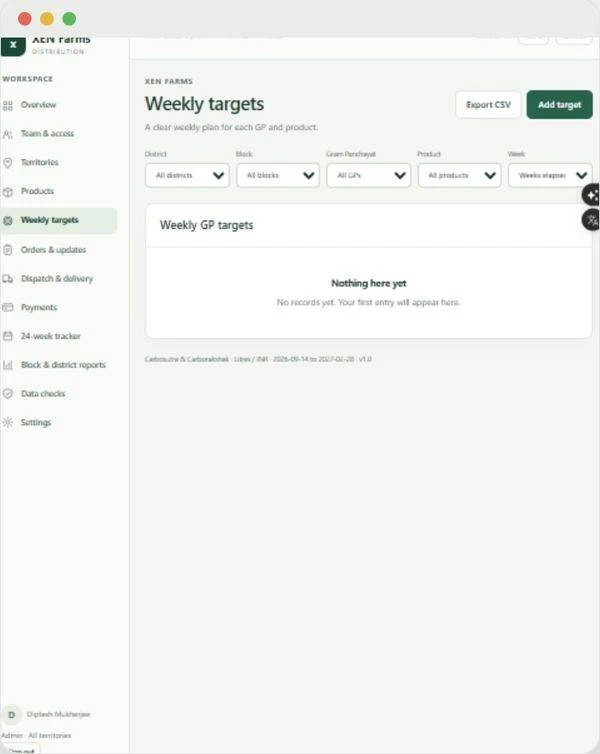
The XEN mobile app

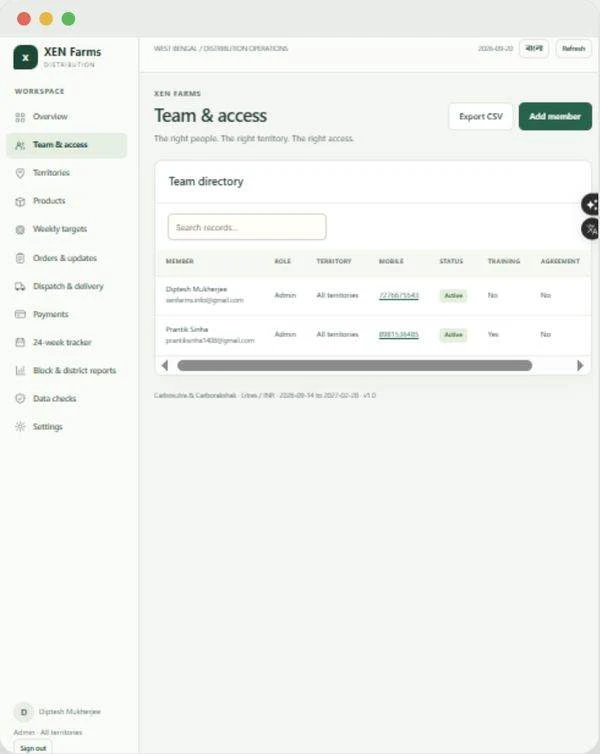
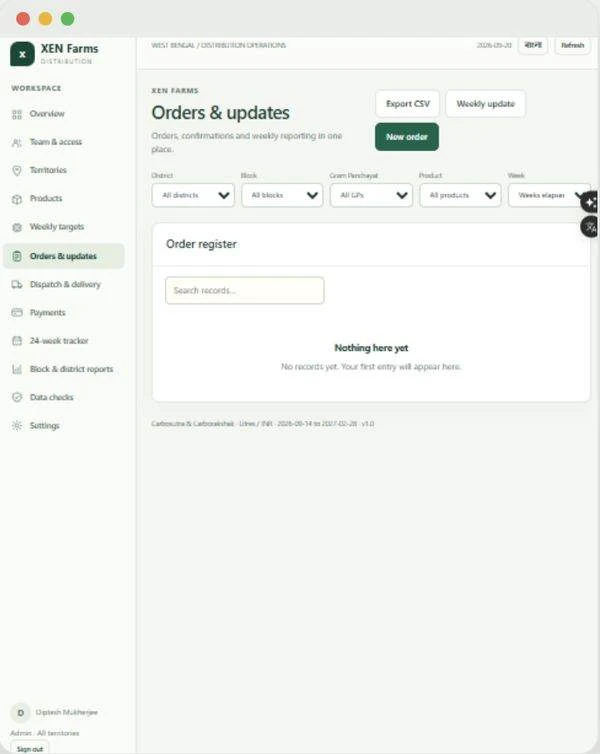
Farmers, stock, payments and commissions in one place.

  • Farmer onboarding & recordsRegister farmers and fields; keep every visit and order on record.
  • Inventory managementLive stock visibility at village, block and district level.
  • Payments for entrepreneursVLEs, BLEs and DLEs paid through the app, with a record of every transaction.
  • Real-time commission trackingCommissions update as orders move through the network.
App screen: weekly targetsApp screen: team and accessApp screen: orders and updates

Winning your first farmers

Three promises. One small ask.

  1. Halve your crop input costCompared with urea, IFFCO-type fertilisers, micronutrients and pesticides, by switching to jaivik products.
  2. Increase your yield by about 10%From the very first season of use, not something you wait years to see.
  3. Get a better harvestBetter shape, size, colour and nutrition in every crop you take to market.

THE ASK

“Try it on just 1–2 katha first.”

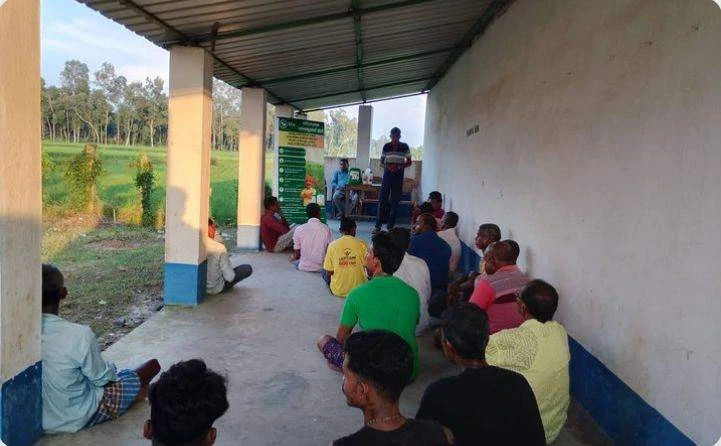
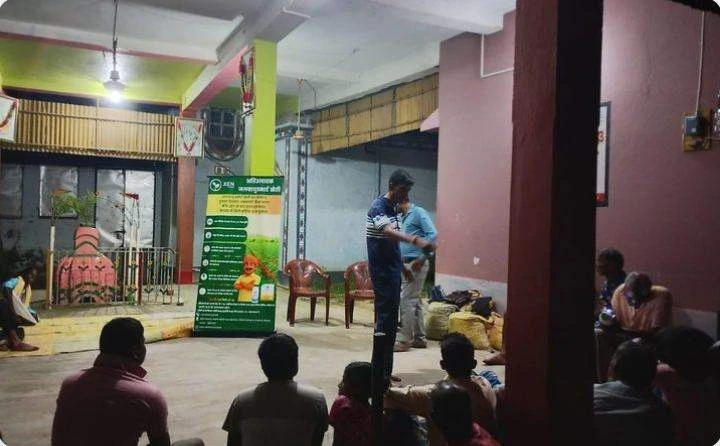
Farmer meeting in a village hall Farmer meeting under a shed beside fields Evening farmer meeting with XEN banner Online entrepreneurship development workshop

Growth model

From 10 kathas to the whole gram panchayat.

STAGE 1 · 10 KATHASTrial plot success

A farmer tries XEN on a small plot: low risk, an easy yes, results that speak for themselves.

STAGE 2 · FARMER TO FARMERWord of mouth

Neighbours see the difference and come asking to try it themselves.

STAGE 3 · 1,000 BIGHA / GPScale to the territory

Trial success compounds into adoption across the whole gram panchayat.

One good trial plot is the seed of an entire gram panchayat.

Guarantee programme

Start on 1 katha, backed by a written contract.

XEN can guarantee crop and soil fertility outcomes by contract, so farmers start at close to half their usual input cost with documented results.

01Free soil test at the start

Baseline pH, organic carbon, NPK and micronutrients.

02Written application schedule

Crop-specific doses and timings, signed by both sides.

03Measure & compare the harvest

Yield recorded against a comparison plot.

04Free soil test at the end

Track the change in soil health.

Conditional guarantee of a 5–10% yield increase, with compensation if yield falls short as per contract terms. Guarantee is set based on soil testing and XEN VLE feedback; learn crop-specific conditions beforehand.

Your opportunity starts here

So, will you come with us to change our Paschim Bangla, village by village?

“By continuous achievement alone we can justify our great ancestry.” — Sir Jagadish Chandra Bose

15 proven crops₹5,000–20,000/acre verified savingsThree-tier earningsTraining & app

Bharat Green Organic · Authorised market outreach partner, West Bengal

Supriyo GhoshState Head – Community Management
+91 62944 78826
Tirtha RitState Head – Community Management
+91 70290 74541

Apply to become a XEN entrepreneur

Contact us

Let’s grow together.

Farmers, entrepreneurs, FPOs, gaushalas, CBG plants, institutions, investors and press: we’d like to hear from you.

Head office
XEN Agritech Private Limited
East India Works, 19 R.N. Mukherjee Road,
Hanuman Estates, Esplanade, B.B.D. Bagh,
Kolkata, West Bengal 700001
Open in Google Maps ↗
Write to us
General enquiriesProducts, orders, press
namaste@xenfarms.com
PartnershipsDiptesh Mukherjee, Founder & CEO
diptesh.m@xenfarms.com
Call us
Business & institutionalDiptesh Mukherjee
+91 72766 75543
Farmers & entrepreneurs, West BengalSupriyo Ghosh
+91 62944 78826
Farmers & entrepreneurs, West BengalTirtha Rit
+91 70290 74541

Send us a message